Introduction: The Hidden Cost of Solder Paste Mismanagement
In every SMT electronics manufacturing facility, there is a refrigerator — or several. Inside that refrigerator are jars of solder paste, each one a precisely engineered mixture of metal alloy powder, flux chemistry, and rheological additives that must be stored, handled, and used within strict parameters to produce reliable solder joints.
And in most factories, the management of those solder paste jars is shockingly manual: handwritten labels with receipt dates, paper logs of thawing times, operators checking expiry dates by eye, and production supervisors trying to enforce first-in-first-out rotation by memory and habit.
The consequences of solder paste mismanagement are well-documented and expensive:
- Expired paste produces insufficient flux activity, poor wetting, and solder balling
- Improperly thawed paste (used before reaching room temperature) causes slump, bridging, and voiding
- Inadequately mixed paste (insufficient post-thaw mixing) produces inconsistent viscosity and print defects
- Wrong paste for the board (incorrect alloy or flux chemistry) causes reliability failures in the field
These defects are not random — they are systematic, traceable to specific paste jars, and entirely preventable with proper management. Yet most factories lack the systems to prevent them consistently.
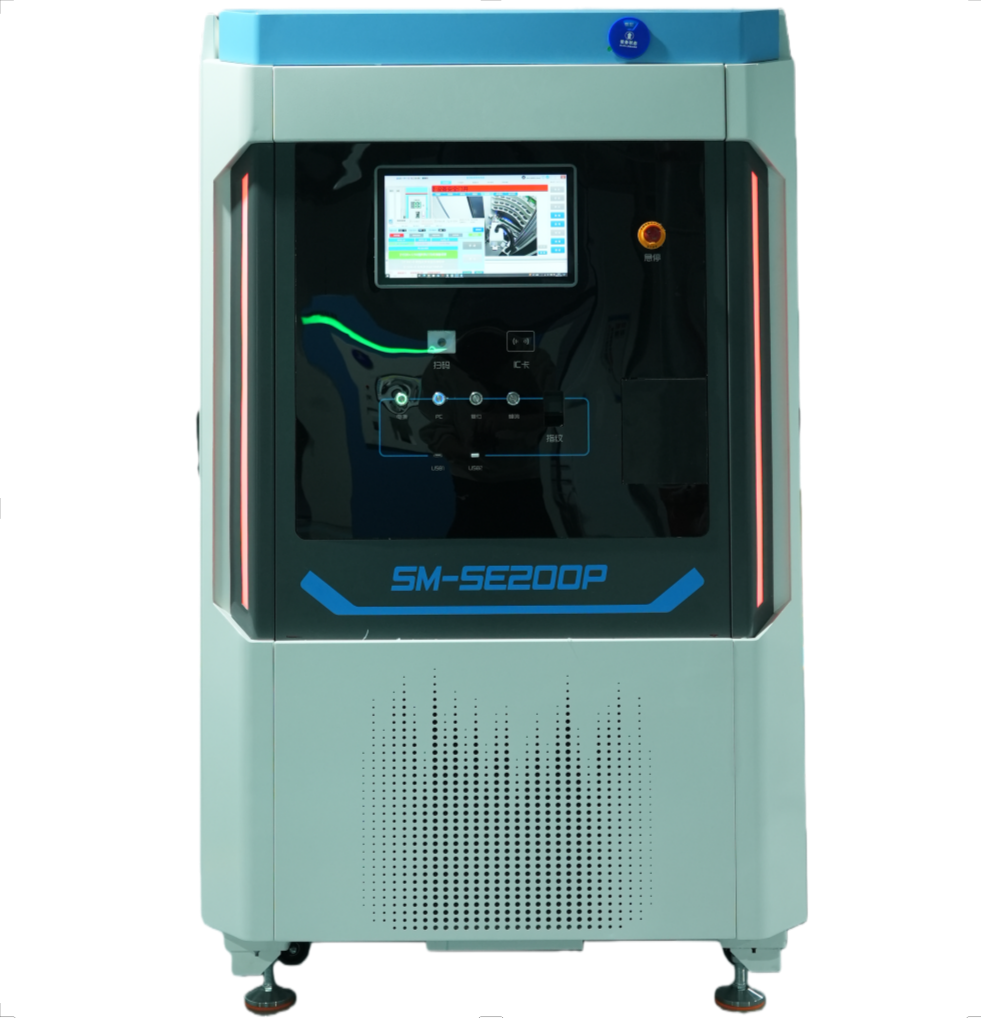
The SunMoon Intelligent PLC Solder Paste Control Cabinet at $53,000 is the solution: a complete, intelligent solder paste management system that tracks every jar through its entire life cycle, integrates with the factory MES, and prevents defects before they reach the production line.
Solder Paste: The Most Critical Consumable in SMT Manufacturing
What Solder Paste Is and Why It’s Demanding
Solder paste is a complex, engineered material — not a simple consumable like a drill bit or a cleaning cloth. Understanding its requirements explains why intelligent management is necessary.
Composition:
- Metal alloy powder (85–92% by weight): Tin-silver-copper (SAC305, SAC405), tin-lead (Sn63Pb37), or specialty alloys (low-temperature bismuth-tin, high-reliability silver-bearing). Particle size: 20–45 μm (Type 3), 15–25 μm (Type 4), 5–15 μm (Type 5 and 6 for fine-pitch applications).
- Flux vehicle (8–15% by weight): Rosin or resin base, activators (organic acids, halides), rheological additives (thixotropic agents, solvents). The flux cleans oxide from pad and component surfaces, enables wetting, and protects the joint during reflow.
Why solder paste is demanding:
- Temperature sensitivity: Must be stored at 0–10°C to prevent flux degradation and metal powder oxidation. Above 10°C, flux chemistry degrades; below 0°C, moisture condensation on thawing causes spattering.
- Shelf life: Typically 6 months from manufacture at correct storage temperature. After expiry, flux activity is insufficient for reliable soldering.
- Thawing requirements: Must be brought to room temperature (22–25°C) before opening — typically 4–8 hours. Opening cold paste causes moisture condensation that contaminates the flux.
- Working life: Once opened and on the stencil, paste has a limited working life (typically 4–8 hours) before flux evaporation degrades print quality.
- Mixing requirements: After thawing, paste must be mixed (manually or mechanically) for 1–3 minutes to restore homogeneous viscosity.
The management challenge: A busy SMT line may use 5–20 jars of solder paste per day, across multiple alloys and flux chemistries. Managing the storage, thawing, mixing, and usage of this volume of paste — while maintaining traceability and preventing defects — is a significant operational challenge that manual systems cannot reliably address.
The Cost of Solder Paste Defects
Solder paste-related defects are among the most expensive in SMT manufacturing:
Rework cost:
- Manual rework of a solder defect: $5–$50 per joint (labor + materials)
- BGA rework: $50–$500 per component
- Board scrap (unrepairable defect): $10–$10,000+ per board (depending on component value)
Field failure cost:
- Warranty repair: $50–$500 per unit
- Field recall: $1,000–$10,000+ per unit (including logistics and customer impact)
- Liability: Potentially unlimited for safety-critical applications (automotive, medical, aerospace)
Audit and compliance cost:
- Customer audit failure due to inadequate paste traceability: Loss of customer, $100,000–$1,000,000+ impact
- Regulatory non-compliance (FDA, IATF 16949): Fines, production suspension, certification loss
At $53,000, the SunMoon system pays for itself by preventing a single significant field recall or customer audit failure — and delivers ongoing savings through defect prevention and labor reduction every day of operation.
The SunMoon System: Architecture and Intelligence
Whole Life Cycle Management: What It Means
“Whole life cycle management” is not marketing language — it describes a specific, comprehensive approach to solder paste traceability that covers every stage from receipt to disposal:
Stage 1: Receipt and registration
- Each solder paste jar is registered in the system upon receipt
- Data captured: Manufacturer, product code, alloy, flux type, lot number, manufacture date, expiry date, quantity
- Barcode or RFID scanning for rapid, error-free registration
- System calculates remaining shelf life and assigns storage location
Stage 2: Cold storage management
- Jars stored in the temperature-controlled cabinet (0–10°C)
- Real-time temperature monitoring with alarm on deviation
- First-in-first-out (FIFO) enforcement — system directs operators to the oldest jar of each paste type
- Expiry alert — system alerts when paste is approaching expiry date
- Inventory tracking — real-time visibility of paste stock by type, lot, and quantity
Stage 3: Thawing management
- Operator requests paste for production — system selects the appropriate jar (FIFO, correct type)
- Jar is transferred to thawing zone — system records thaw start time
- System calculates required thaw time based on jar size and ambient temperature
- Thaw completion alert — system notifies operator when paste is ready for use
- Prevents premature use — system locks out paste that has not completed thawing
Stage 4: Mixing management
- After thawing, system prompts operator to mix paste
- Mixing time tracked — system records start and end of mixing
- Mixing adequacy verification — some systems include viscosity measurement
- Prevents use of unmixed paste
Stage 5: Production use tracking
- Paste jar assigned to specific production order, line, and stencil
- Working life timer starts when paste is opened on the stencil
- Working life alert — system warns when paste is approaching end of working life
- Paste return tracking — unused paste returned to cabinet is logged with remaining working life
Stage 6: Disposal and traceability
- Expired or end-of-life paste flagged for disposal
- Complete traceability record: Every board produced with each paste jar is recorded
- Defect investigation: If a soldering defect is found, the paste lot used can be immediately identified and all boards produced with that lot can be traced
ARM-Integrated Intelligent Control
The ARM processor at the heart of the SunMoon system provides computing capability far beyond a simple PLC:
Real-time data processing:
- Continuous monitoring of temperature, humidity, and inventory status
- Real-time calculation of remaining shelf life, thaw time, and working life for every jar
- Instant response to operator requests — no waiting for data retrieval
Intelligent decision support:
- Automatic paste selection based on production order requirements (alloy, flux type, quantity)
- FIFO enforcement with exception handling (e.g., skip a jar if it’s reserved for a specific customer)
- Predictive alerts — warns of upcoming expiry before it becomes a problem
- Optimization recommendations — suggests paste consumption sequence to minimize waste
Personalized configuration:
- Different management rules for different paste types (e.g., longer thaw time for larger jars, shorter working life for high-activity flux)
- Customer-specific requirements (e.g., automotive customer requires 4-hour working life limit vs. standard 8-hour)
- User access control — different permissions for operators, supervisors, and quality managers
Data analytics:
- Paste consumption trends — identifies which paste types are used most, enabling optimized ordering
- Waste analysis — tracks paste disposed before use, identifies waste reduction opportunities
- Defect correlation — links paste lot data with production quality data to identify paste-related defect patterns
MES System Docking: The Integration Advantage
The SunMoon system’s MES integration capability is its most strategically important feature for modern electronics manufacturers:
What MES integration enables:
Automatic production record population:
- When a paste jar is assigned to a production order, the paste lot number, alloy, flux type, and expiry date are automatically written to the MES production record
- No manual data entry — eliminates transcription errors and saves operator time
- Complete, accurate paste traceability in every production record
Bidirectional data flow:
- MES sends production order data to the paste management system — system automatically selects the correct paste type for each order
- Paste management system sends paste status data to MES — production planning can see paste availability in real time
Quality system integration:
- Paste data flows into the quality management system — available for SPC (Statistical Process Control) analysis
- Defect data from inspection systems can be correlated with paste lot data — enabling rapid root cause analysis
ERP integration:
- Paste consumption data flows to ERP for automatic inventory replenishment
- Paste cost data flows to ERP for accurate production cost accounting
Supported MES platforms: Confirm specific MES platform compatibility with the supplier. Common integrations include SAP ME, Siemens Opcenter, Aegis FactoryLogix, Valor, and custom MES platforms via standard APIs (REST, OPC-UA, MQTT).
Regulatory Compliance: Why Traceability Is Non-Negotiable
IATF 16949 — Automotive Electronics
The automotive electronics supply chain operates under IATF 16949 — the automotive quality management standard that requires:
Process control:
- Documented procedures for solder paste management
- Controlled storage conditions with monitoring records
- Defined thawing and mixing procedures with compliance verification
Traceability:
- Complete traceability of materials used in each production lot
- Ability to identify all products produced with a specific paste lot (forward traceability)
- Ability to identify all materials used in a specific product (backward traceability)
Record retention:
- Production records retained for the life of the vehicle (15+ years)
- Paste lot data must be retained and retrievable for the full retention period
The SunMoon system’s automated record generation and MES integration directly supports IATF 16949 compliance — replacing manual records that are incomplete, illegible, or lost.
ISO 13485 — Medical Device Electronics
Medical device electronics manufacturing requires ISO 13485 compliance — with even stricter traceability requirements:
Device history record (DHR):
- Every medical device must have a complete DHR including all materials used
- Paste lot data is a required DHR element
- DHR must be retained for the life of the device (typically 10+ years after last manufacture)
Process validation:
- Solder paste management process must be validated — demonstrating that the process consistently produces compliant results
- The SunMoon system’s automated controls and records support process validation documentation
Change control:
- Any change to solder paste type or supplier requires documented change control
- System records provide evidence of when paste changes occurred and which products were affected
AS9100 — Aerospace Electronics
Aerospace electronics manufacturing under AS9100 requires:
First article inspection (FAI):
- Complete material traceability for first article inspection
- Paste lot data required as part of FAI documentation
Counterfeit material prevention:
- Verification that materials are from approved sources
- System can enforce approved supplier lists — alerts if paste from unapproved supplier is registered
Configuration management:
- Complete record of materials used in each production configuration
- Paste lot data is a required configuration management element
SMT Line Integration: Where the System Fits
The SMT Production Line Context
The SunMoon Solder Paste Control Cabinet is one component of a complete SMT production line:
Upstream of the cabinet:
- Incoming inspection: Paste received, inspected, and registered in the system
- Supplier management: Approved supplier list enforced by the system
The cabinet’s role:
- Storage: Temperature-controlled storage at 0–10°C
- Management: Life cycle tracking, FIFO enforcement, expiry management
- Thawing: Controlled thawing with time tracking
- Dispensing: Controlled release to production with assignment to production order
Downstream of the cabinet:
- Solder paste printer (stencil printer): Paste applied to PCB through stencil
- SPI (Solder Paste Inspection): 3D inspection of paste deposit volume, area, and height
- Pick and place: Components placed on paste deposits
- Reflow oven: Paste reflowed to form solder joints
- AOI (Automated Optical Inspection): Inspection of solder joint quality
MES integration connects all of these stages — paste lot data from the cabinet flows through the entire production record, enabling complete traceability from paste receipt to finished board.
Solder Paste Printer Integration
Some advanced configurations integrate the paste management system directly with the solder paste printer:
Automatic paste selection:
- Printer receives production order from MES
- Paste management system automatically selects and releases the correct paste jar
- Paste lot number is automatically recorded in the printer’s production log
Print parameter optimization:
- Paste viscosity data (from the management system) can be used to automatically adjust printer parameters (squeegee speed, pressure, separation speed)
- Ensures optimal print quality for each paste type and condition
Working life monitoring:
- Printer monitors paste working life in real time
- Alerts operator when paste must be replaced
- Prevents use of paste that has exceeded working life on the stencil
The Economics of Intelligent Paste Management
Investment: $53,000
Defect Prevention Value
Solder paste-related defect rate (industry average without intelligent management):
- Paste-related defects: 20–40% of all SMT soldering defects
- Typical SMT defect rate: 500–2,000 DPMO (defects per million opportunities)
- Paste-related defects: 100–800 DPMO
Cost of paste-related defects (medium-volume EMS, 1 million boards/year):
- Rework cost: $5/defect × 500 defects/million × 1,000,000 boards = $2,500,000/year
- Paste-related portion (30%): $750,000/year
Defect reduction with intelligent paste management:
- Elimination of expired paste use: 100% reduction in expiry-related defects
- Elimination of improper thawing: 100% reduction in thaw-related defects
- Reduction in wrong paste use: 95%+ reduction
- Overall paste-related defect reduction: 60–80%
Annual defect cost saving: $450,000–$600,000 Payback on $53,000 investment: 5–7 weeks
Labor Savings
Manual paste management labor (without system):
- Paste management tasks: 2 hours/day × $15/hour = $30/day
- Annual labor cost: $9,000
Automated paste management labor (with system):
- System handles tracking, alerts, and records automatically
- Operator time: 30 minutes/day × $15/hour = $7.50/day
- Annual labor cost: $2,250
Annual labor saving: $6,750 — modest, but the defect prevention value is the primary driver.
Audit and Compliance Value
Customer audit preparation (without system):
- Manual record compilation for customer audit: 40–80 hours per audit
- Audit failure risk: 10–20% (due to incomplete or inaccurate records)
- Cost of audit failure: Loss of customer, $500,000–$5,000,000+ impact
Customer audit preparation (with system):
- Automated record generation: 2–4 hours per audit
- Audit failure risk: <1% (complete, accurate, automated records)
- Audit preparation saving: 36–76 hours per audit
- Audit failure risk reduction: 90%+
Comparison: SunMoon vs. Manual Management vs. Basic Refrigerator Systems
| Feature | Manual Management | Basic Refrigerator + Logger | SunMoon Intelligent System |
|---|---|---|---|
| Temperature monitoring | Manual checks | Continuous logging | Continuous + alarm + MES |
| Expiry tracking | Paper labels | Spreadsheet | Automated, real-time |
| FIFO enforcement | Operator discipline | Operator discipline | System-enforced |
| Thaw time tracking | Paper log | Paper log | Automated, locked |
| MES integration | None | None | Native docking |
| Traceability | Incomplete | Partial | Complete, automated |
| Audit readiness | Poor | Moderate | Excellent |
| Defect prevention | Low | Low | High |
| Cost | $0 | $2,000–$5,000 | $53,000 |
| ROI | Negative (defect cost) | Low | High (weeks payback) |
Featured Product: SunMoon Intelligent Solder Paste Control Cabinet on MEGA BDM
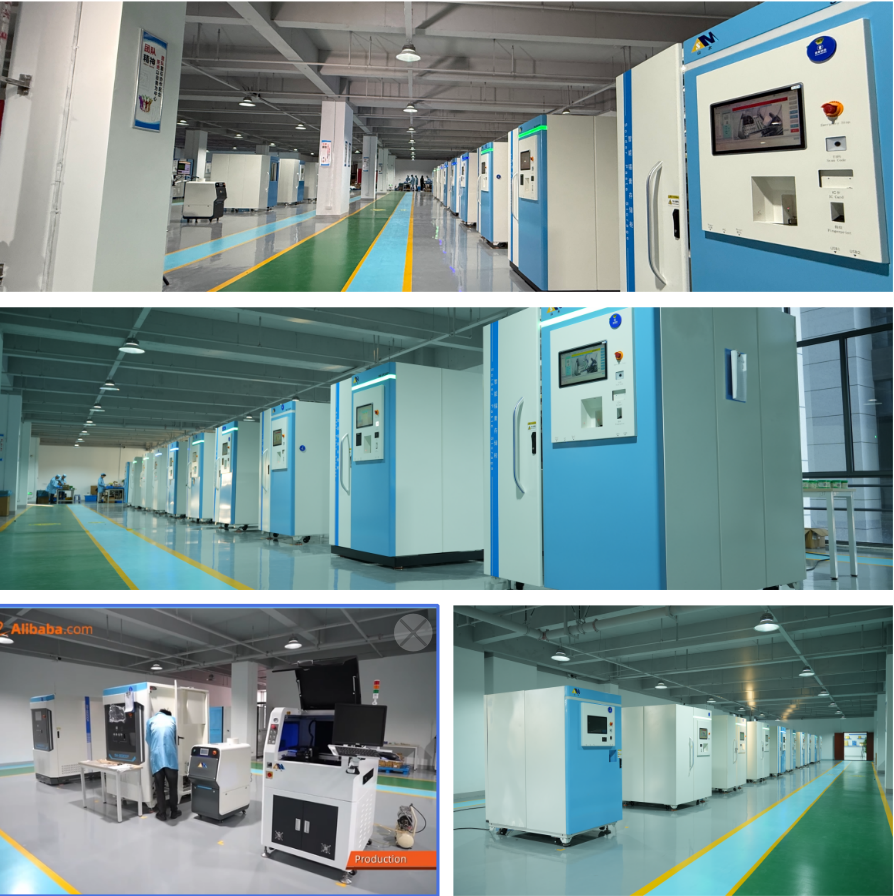
MEGA BDM has sourced and verified the SunMoon Intelligent PLC Solder Paste Control Cabinet with Whole Life Cycle Management, ARM-Integrated Control, and MES System Docking from SunMoon — a verified global SMT equipment manufacturer specializing in intelligent solder paste management systems for automotive, medical, aerospace, and consumer electronics manufacturing applications.
👉 View the SunMoon Solder Paste Control Cabinet on MEGA BDM
Frequently Asked Questions
What MES platforms does the system integrate with?
Confirm specific MES platform compatibility with the supplier. Provide your MES platform name and version for confirmation of native integration or API-based integration options.
What is the storage capacity (number of jars)?
Confirm the storage capacity with the supplier. Provide your typical paste inventory (number of jars, jar sizes) for an accurate capacity specification.
What temperature range does the storage cabinet maintain?
Confirm the storage temperature range and accuracy with the supplier. Standard solder paste storage requires 0–10°C — confirm the cabinet maintains this range under your ambient temperature conditions.
Does the system support RFID as well as barcode scanning?
Confirm RFID and barcode scanning capability with the supplier. RFID enables faster, hands-free jar registration and tracking — confirm if this is included or available as an option.
What quality standards does the system support documentation for?
Confirm which quality standards (IATF 16949, ISO 13485, AS9100, IPC) the system’s documentation and record formats support. Provide your specific quality standard requirements for confirmation.
What is the installation and commissioning process?
Confirm installation requirements (electrical, network, physical space) and commissioning support (on-site or remote) with the supplier. MES integration commissioning typically requires coordination between the supplier and your IT/MES team.
Conclusion
The SunMoon Intelligent PLC Solder Paste Control Cabinet transforms solder paste management from a manual, error-prone process into an automated, intelligent, and fully traceable system that prevents defects before they reach the production line and generates the complete documentation that modern quality standards demand.
At $53,000 — with payback periods of 5–7 weeks from defect prevention savings alone, plus ongoing labor savings and audit compliance value — this system is one of the highest-ROI quality investments available in SMT electronics manufacturing. For automotive, medical, aerospace, and high-reliability electronics manufacturers where paste traceability is a customer requirement and paste-related defects carry significant liability, the SunMoon system is not optional equipment — it is essential infrastructure.
👉 View the full product details on MEGA BDM