
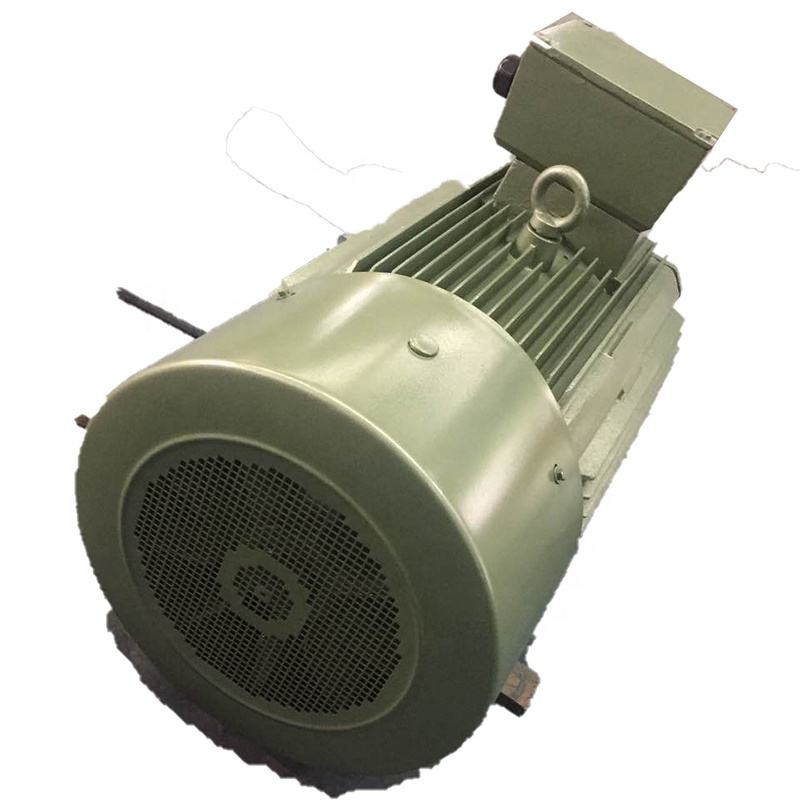
Introduction: The Hidden Energy Crisis in Industrial Motor Systems
Electric motors consume approximately 45% of all electricity generated globally. In industrial facilities — factories, mines, pumping stations, water treatment plants, cement plants, and steel mills — motors account for 60–70% of total electrical energy consumption. And the vast majority of these motors, historically, have operated at a single fixed speed: full speed, all the time, regardless of whether the process actually requires full speed.
The result is catastrophic energy waste. A pump running at full speed when the process only requires 80% flow wastes approximately 49% of its energy input (because power consumption follows the cube law — reducing speed by 20% reduces power by nearly 50%). Multiply this across hundreds of motors in a large industrial facility, and the wasted energy represents millions of dollars per year in unnecessary electricity costs.
The solution is well-established and proven: variable speed drives (VSDs) — also called variable frequency drives (VFDs) or servo motor controllers — that precisely control motor speed to match actual process requirements. And for high-power industrial applications from 100kW to 1,800kW, the Programmable Servo Motor Controller compatible with SEMC, WEG, ABB, GE, and LUNAR motors represents one of the most capable and cost-effective solutions available through global sourcing channels.
What Is a Variable Speed Drive / Servo Motor Controller?
A variable speed drive (VSD) is an electronic power conversion device that controls the speed and torque of an AC electric motor by varying the frequency and voltage of the electrical supply delivered to the motor.
How It Works
- Rectification — the incoming AC supply (50Hz or 60Hz) is converted to DC by a rectifier stage
- DC bus — the DC power is stored and filtered in a DC bus (capacitor bank)
- Inversion — an inverter stage converts the DC back to AC at the desired output frequency and voltage
- Motor control — the output frequency determines motor speed; the output voltage maintains correct motor flux
By varying the output frequency from near-zero to above the supply frequency, the drive can control motor speed from standstill to above rated speed — with precise, programmable control of acceleration, deceleration, torque, and speed.
Servo Motor Controller vs. Standard VFD
The term “servo motor controller” in industrial contexts typically refers to a drive with enhanced control algorithms — specifically vector control or direct torque control (DTC) — that provides:
- Precise torque control at all speeds including zero speed
- Fast dynamic response to load changes
- High starting torque without excessive current draw
- Accurate speed regulation even under varying load conditions
This is distinct from basic V/Hz (volts per hertz) drives, which provide simple speed control but limited torque performance. For demanding industrial applications — hoists, compressors, extruders, rolling mills — servo-class control is essential.
The Power Range: 100kW to 1,800kW
The available power ratings — 100kW, 200kW, 300kW, 400kW, 450kW, 600kW, and 1,800kW — cover the full spectrum of large industrial motor applications:
| Power Rating | Typical Applications |
|---|---|
| 100kW | Large pumps, fans, compressors, conveyors |
| 200kW | Mine ventilation fans, large pumps, crushers |
| 300kW | Ball mills, large compressors, ship thrusters |
| 400kW | SAG mill drives, large centrifugal pumps |
| 450kW | Large industrial fans, marine propulsion |
| 600kW | Large grinding mills, major pump stations |
| 1,800kW | Very large mill drives, major compressor stations, ship propulsion |
The ability to source across this entire power range from a single supplier simplifies procurement, standardizes spare parts, and reduces training requirements for maintenance teams.
Multi-Brand Motor Compatibility: SEMC, WEG, ABB, GE, LUNAR
One of the most significant practical advantages of this drive system is its compatibility with motors from multiple major manufacturers. Industrial facilities rarely have a single motor brand — they accumulate motors from different suppliers over decades of operation. A drive system that works with all of them eliminates the need to replace existing motors when upgrading to variable speed control.
Brand Overview
WEG (Brazil) One of the world’s largest electric motor manufacturers, with a strong presence in South America, Europe, and Asia. WEG motors are widely used in mining, oil & gas, and industrial applications globally. Known for robust construction and reliability in harsh environments.
ABB (Switzerland/Sweden) A global leader in industrial automation and electrification. ABB motors are specified extensively in process industries, marine, and power generation. ABB also manufactures its own drives (ACS series), but third-party drives compatible with ABB motors offer significant cost advantages.
GE (General Electric, USA) GE industrial motors are widely installed in North American and international facilities, particularly in oil & gas, power generation, and heavy industry. GE’s industrial motor business (now part of Nidec) has a massive installed base worldwide.
SEMC Specialized electric motor manufacturer with strong presence in specific industrial segments. SEMC motors are found in mining, cement, and heavy industry applications particularly in Asian and emerging markets.
LUNAR Industrial motor brand with installations across manufacturing and process industry applications in Asian markets.
Why Multi-Brand Compatibility Matters
For a plant engineer or procurement manager evaluating a drive upgrade project, multi-brand compatibility means:
- No forced motor replacement — existing motors can be retained, saving significant capital cost
- Phased upgrade programs — drives can be installed on existing motors as budget allows
- Simplified spare parts — one drive platform for multiple motor brands reduces spare parts inventory
- Reduced training — maintenance teams learn one drive system, not multiple
The Energy Savings Case: The Numbers That Matter
The financial case for variable speed drives is one of the strongest in industrial energy management. The physics are unambiguous:
The Affinity Laws (Fan & Pump Applications)
For centrifugal fans and pumps — the most common VSD application — the relationship between speed and power follows the cube law:
Power ∝ Speed³
This means:
- Reduce speed by 10% → power reduces by 27%
- Reduce speed by 20% → power reduces by 49%
- Reduce speed by 30% → power reduces by 66%
- Reduce speed by 50% → power reduces by 87.5%
Real-World Example: 300kW Pump Application
Without VSD (fixed speed, throttle valve control):
- Motor power: 300kW continuous
- Annual energy consumption (8,000 hours): 2,400,000 kWh
- Annual energy cost at $0.10/kWh: $240,000
With VSD (average speed 80% of rated):
- Motor power: 300kW × (0.8)³ = 154kW average
- Annual energy consumption: 1,229,000 kWh
- Annual energy cost: $122,900
- Annual saving: $117,100
Payback on $30,000 drive investment: approximately 3 months
This is not an exceptional case — it is typical for pump and fan applications where the process rarely requires full flow. For mining, water treatment, HVAC, and process industry applications, payback periods of 3–18 months are standard.
Applications by Industry
Mining & Mineral Processing
Mining is one of the largest applications for high-power variable speed drives:
Conveyor systems
- Variable speed control for belt conveyors transporting ore, coal, and minerals
- Soft start eliminates mechanical shock on long conveyors
- Speed matching between multiple conveyor sections
- Energy recovery during downhill conveying (regenerative braking)
Grinding mills
- Ball mills, SAG mills, and rod mills require precise speed control for optimal grinding efficiency
- Variable speed allows optimization of mill speed for different ore types and feed sizes
- Significant energy savings vs. fixed-speed operation
Pumping systems
- Dewatering pumps, slurry pumps, and process water pumps
- Variable speed matches pump output to actual demand
- Eliminates throttling losses from control valves
Ventilation fans
- Underground mine ventilation requires massive fan systems
- Variable speed control matches airflow to actual ventilation demand
- Energy savings of 40–60% vs. fixed-speed operation are common
Oil & Gas
Pipeline pumping stations
- Crude oil and product pipeline pumps require variable flow control
- VSD eliminates the need for control valves and their associated pressure losses
- Significant energy savings on long-distance pipeline systems
Gas compression
- Compressor speed control for gas gathering, transmission, and processing
- Precise pressure and flow control without recycle valves
- Reduced mechanical wear from soft start and controlled operation
Offshore platforms
- Seawater lift pumps, injection pumps, and process pumps
- Marine propulsion and thruster control
- Power generation and distribution optimization
Water & Wastewater Treatment
Pumping stations
- Raw water intake pumps, transfer pumps, and distribution pumps
- Variable speed matches pump output to actual demand — eliminates overflow and pressure surges
- Energy savings of 30–50% vs. fixed-speed operation
Aeration systems
- Blowers and aerators for biological treatment processes
- Variable speed matches aeration to actual oxygen demand
- Major energy savings in biological treatment
Sludge handling
- Centrifuges, belt presses, and sludge pumps
- Variable speed optimizes dewatering performance
Cement & Building Materials
Kiln drives
- Rotary kiln speed control for cement, lime, and mineral processing
- Precise speed control for optimal product quality
- Soft start eliminates mechanical shock on large rotating equipment
Mill drives
- Raw mill, cement mill, and coal mill speed control
- Variable speed optimizes grinding efficiency for different feed materials
Fan systems
- Kiln ID fans, preheater fans, and cooler fans
- Variable speed matches airflow to process requirements
- Major energy savings vs. damper control
Steel & Metals Processing
Rolling mill drives
- Precise speed and torque control for hot and cold rolling mills
- Coordinated multi-drive control for tandem mill stands
- Tension control between mill stands
Crane and hoist drives
- Precise speed control for overhead cranes and hoists
- Regenerative braking for energy recovery during lowering
- Smooth, controlled motion for safe load handling
Technical Specifications to Evaluate
When specifying a high-power variable speed drive:
| Specification | What to Confirm |
|---|---|
| Power rating | kW at your motor’s rated voltage |
| Input voltage | 380V, 400V, 415V, 440V, 460V, 690V (confirm your grid voltage) |
| Input frequency | 50Hz or 60Hz |
| Output voltage range | Must match motor rated voltage |
| Output frequency range | 0–50Hz minimum; 0–100Hz+ for some applications |
| Control mode | V/Hz, vector control, or DTC |
| Starting torque | % of rated torque at zero speed |
| Overload capacity | % and duration (e.g., 150% for 60 seconds) |
| Efficiency | % at full load (target: >97%) |
| Protection class | IP20 (panel mounting) or IP54/IP55 (standalone) |
| Cooling method | Forced air or liquid cooling |
| Communication | Modbus, Profibus, Ethernet/IP, or other fieldbus |
| Certifications | CE, UL, IEC standards |
| Operating temperature | Ambient temperature range |
| Altitude derating | Required above 1,000m altitude |
Installation & Commissioning Considerations
Electrical Installation
- Input protection: Circuit breaker or fused disconnect rated for drive input current
- Input line reactor: Recommended to reduce harmonic distortion and protect drive from supply disturbances
- Output filter: May be required for long motor cables (>50m) to prevent insulation stress
- Grounding: Proper PE (protective earth) connection critical for EMC and safety
- Cable sizing: Input and output cables sized for drive rated current
Mechanical Installation
- Ventilation: Adequate airflow for drive cooling — follow manufacturer’s clearance requirements
- Vibration isolation: For installations near heavy machinery
- Environmental protection: IP rating must match installation environment
Commissioning
- Motor data entry: Enter motor nameplate data (voltage, current, frequency, power factor, speed)
- Auto-tuning: Most modern drives perform automatic motor identification for optimal control
- Parameter setting: Configure acceleration/deceleration ramps, speed limits, protection settings
- Control wiring: Connect speed reference, start/stop, and feedback signals
- Test run: Verify operation at low speed before full-speed commissioning
Harmonics & Power Quality
High-power VFDs generate harmonic currents that can affect power quality. For large drives (>100kW), consider:
- 12-pulse or 18-pulse rectifier — reduces harmonic distortion at source
- Active front end (AFE) — near-unity power factor and very low harmonics
- Passive harmonic filters — cost-effective harmonic mitigation
- Active harmonic filters — dynamic harmonic compensation
Confirm harmonic mitigation requirements with your utility and electrical engineer before installation.
Featured Product: Programmable Servo Motor Controller on MEGA BDM
MEGA BDM has sourced and verified the Programmable Servo Motor Controller 100kW–1800kW — compatible with SEMC, WEG, ABB, GE, and LUNAR motors — from a verified global manufacturer with proven industrial drive export experience across mining, oil & gas, water treatment, and heavy industry applications.
👉 View the Programmable Motor Controller on MEGA BDM
Frequently Asked Questions
What grid voltage does this drive support?
Confirm the specific input voltage options with the supplier. Common industrial voltages supported include 380V, 400V, 415V, 440V, and 690V (3-phase). Ensure the drive input voltage matches your facility’s grid voltage.
Can the drive be used with existing motors without modification?
Yes — the drive is designed to work with existing SEMC, WEG, ABB, GE, and LUNAR motors without motor modification. Provide the motor nameplate data (voltage, current, power, speed, power factor) to the supplier to confirm compatibility.
What control interface options are available?
Modern industrial drives support multiple control interfaces including local keypad, analog inputs (4–20mA, 0–10V), digital inputs, and fieldbus communication (Modbus RTU, Profibus DP, Ethernet/IP). Confirm the required interface for your control system.
Is regenerative braking available?
Regenerative braking (returning braking energy to the grid) is available on drives with Active Front End (AFE) technology. Standard drives dissipate braking energy in a braking resistor. Confirm your braking requirements — regenerative capability is important for hoists, cranes, and downhill conveyors.
What protection features are included?
Industrial drives include comprehensive protection: overcurrent, overvoltage, undervoltage, overtemperature, ground fault, phase loss, and motor overload protection. Confirm the specific protection features and settings with the supplier.
What is the warranty period?
Confirm warranty terms with the supplier. Standard industrial drive warranties are typically 12–24 months. Extended warranty options may be available.
Conclusion
The Programmable Servo Motor Controller 100kW–1800kW addresses one of the most significant and measurable opportunities in industrial energy management. With compatibility across SEMC, WEG, ABB, GE, and LUNAR motors, a power range covering virtually all large industrial motor applications, and energy savings that typically deliver payback in months rather than years, this drive system represents exceptional value for industrial operators worldwide.
At $30,000, the investment is modest relative to the energy savings it generates — and the operational benefits of precise motor control, reduced mechanical wear, and improved process control extend far beyond the energy bill.
👉 View the full product details on MEGA BDM