
Introduction: The Invisible Pollution Problem in Industrial Gas Streams
Every industrial combustion process — every furnace, every boiler, every gasifier, every incinerator — produces a gas stream that contains more than just CO₂ and water vapor. Mixed into that gas stream are fine particles, tar aerosols, acid mists, heavy metal compounds, and sub-micron particulates that conventional pollution control equipment cannot adequately capture.
These contaminants are not merely a regulatory compliance problem. They are an operational problem. Tar aerosols foul downstream equipment — heat exchangers, compressors, gas engines, and turbines — causing unplanned shutdowns and expensive maintenance. Fine particles escape fabric filters and cyclones, creating visible plumes that trigger regulatory action and community complaints. Acid mists corrode ductwork, fans, and stacks, shortening equipment life and increasing maintenance costs.
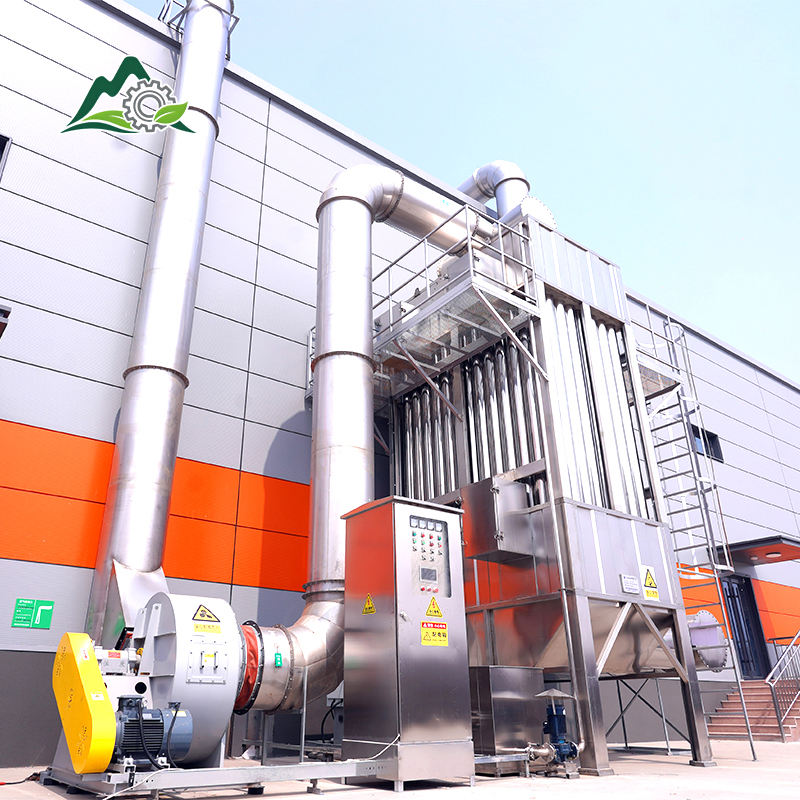
The technology that solves all of these problems simultaneously — capturing fine particles, tar aerosols, acid mists, and heavy metal compounds in a single integrated system — is the Wet Electrostatic Precipitator (WESP). And the Integrated WESP System available through MEGA BDM represents the state of the art in industrial gas cleaning: 99% removal efficiency, corrosion-resistant construction, continuous wet operation, and an integrated design that combines wet scrubbing and electrostatic precipitation in a single compact unit.
At $45,500, this system is positioned for the industrial and municipal applications where conventional pollution control equipment falls short — and where the cost of inadequate gas cleaning is measured in regulatory fines, equipment damage, and community relations failures.
Understanding WESP Technology: How It Works
The Electrostatic Precipitation Principle
Electrostatic precipitation is one of the oldest and most effective industrial gas cleaning technologies — first patented by Frederick Cottrell in 1907 and continuously refined over more than a century of industrial application.
The operating principle is elegantly simple:
Step 1: Ionization High-voltage electrodes (typically 20,000–100,000 volts DC) create a corona discharge — a region of intense electrical field that ionizes the gas molecules surrounding the discharge electrode. This ionization produces a cloud of negative ions in the gas stream.
Step 2: Charging As particles, droplets, and aerosols pass through the ionized gas, they collide with and capture negative ions — becoming negatively charged themselves.
Step 3: Collection The charged particles migrate toward the positively charged collection electrodes (the grounded collection surfaces) under the influence of the electrical field. They deposit on the collection surface and are removed from the gas stream.
Step 4: Cleaning In a dry ESP, the collected dust is periodically rapped off the collection electrodes and falls into hoppers below. In a wet ESP (WESP), water is continuously or periodically flushed over the collection electrodes, washing the collected material into a sump for disposal.
Why Wet vs. Dry ESP?
The choice between wet and dry electrostatic precipitation depends on the characteristics of the gas stream:
Dry ESP — suitable for:
- Dry, non-sticky dusts (fly ash from coal combustion)
- Gas streams without condensable vapors
- Applications where dry dust disposal is preferred
- High-temperature gas streams (above dew point)
Wet ESP (WESP) — required for:
- Gas streams containing tar aerosols (biomass gasification, coking, pyrolysis)
- Gas streams with condensable acid mists (SO₃, HCl, HF)
- Gas streams at or below the dew point (saturated or near-saturated gas)
- Applications requiring the highest collection efficiency for sub-micron particles
- Gas streams where dry dust would be sticky, hygroscopic, or explosive
- Applications requiring simultaneous gas cooling and cleaning
The WESP advantage for difficult gas streams is decisive. Tar aerosols — the most challenging contaminant in biomass gasification and coking applications — cannot be effectively captured by dry ESPs, fabric filters, or cyclones. They are liquid droplets at operating temperature, and they coat and blind dry collection surfaces. The WESP’s wet collection surface continuously washes away collected tar, maintaining collection efficiency indefinitely.
The Integrated WESP: Combining Wet Scrubbing and Electrostatic Precipitation
The Integrated WESP System goes beyond a standalone wet ESP by combining two complementary gas cleaning technologies in a single unit:
Stage 1: Wet Scrubbing The gas stream enters the lower section of the integrated unit, where it contacts a water spray or packed bed scrubbing section. This stage:
- Cools the gas to the required operating temperature
- Saturates the gas with water vapor (required for WESP operation)
- Removes coarse particles and water-soluble gases (SO₂, HCl, NH₃)
- Condenses and captures some tar aerosols through direct contact
Stage 2: Wet Electrostatic Precipitation The pre-conditioned gas rises into the WESP section, where high-voltage electrodes charge and collect the remaining fine particles, tar aerosols, acid mists, and sub-micron particulates. The continuous water film on the collection electrodes washes collected material into the sump.
The integrated design delivers:
- Higher overall collection efficiency than either technology alone
- Smaller footprint than separate scrubber + WESP units
- Simpler installation — single vessel, single sump, single liquid handling system
- Lower capital cost than two separate units
- Simplified operation — single control system for both stages
Performance: What 99% Efficiency Really Means
The Efficiency Measurement Standard
When a WESP system claims 99% efficiency, it is important to understand what is being measured:
Gravimetric efficiency: 99% of the total mass of particles entering the system is captured. This is the most common efficiency metric and the one most relevant to regulatory compliance (which is typically expressed in mg/Nm³ or mg/m³).
Number efficiency: 99% of the total number of particles is captured. Because sub-micron particles are very numerous but contribute little to total mass, number efficiency is typically lower than gravimetric efficiency for the same system.
For regulatory compliance purposes, gravimetric efficiency is the relevant metric. A WESP achieving 99% gravimetric efficiency on a gas stream with 1,000 mg/Nm³ inlet dust concentration will produce an outlet concentration of 10 mg/Nm³ — well within the most stringent emission standards in most jurisdictions.
Particle Size Performance
The WESP’s performance advantage over competing technologies is most pronounced for fine and ultra-fine particles:
| Particle Size | Cyclone | Fabric Filter | Dry ESP | WESP |
|---|---|---|---|---|
| >10 μm | 90–95% | 99%+ | 99%+ | 99%+ |
| 1–10 μm | 50–80% | 99%+ | 95–99% | 99%+ |
| 0.1–1 μm | 10–30% | 95–99% | 80–95% | 95–99% |
| <0.1 μm | <10% | 90–95% | 70–90% | 90–99% |
| Tar aerosols | <20% | Blinding | Blinding | 95–99% |
| Acid mists | <10% | Blinding | Blinding | 95–99% |
The WESP’s ability to capture tar aerosols and acid mists — contaminants that blind and destroy fabric filters and dry ESPs — is its defining advantage for biomass, coking, and chemical process applications.
Emission Standards Compliance
The Integrated WESP System is designed to meet the most stringent emission standards in major markets:
European Union (Industrial Emissions Directive):
- PM: 10–20 mg/Nm³ (achievable with WESP from typical inlet concentrations)
- SO₂: Requires upstream desulfurization; WESP captures residual acid mist
- Heavy metals: Class I metals (Hg, Cd, Tl): 0.05 mg/Nm³ — achievable with WESP
China (GB Standards):
- GB 13271 (Boiler): PM ≤ 20 mg/Nm³ (key cities: 10 mg/Nm³)
- GB 18485 (Waste Incineration): PM ≤ 20 mg/Nm³
- GB 16297 (General): PM ≤ 20–120 mg/Nm³ depending on source category
United States (EPA Standards):
- MATS (Mercury and Air Toxics Standards): PM ≤ 0.03 lb/MMBtu
- NSPS (New Source Performance Standards): Varies by source category
- State implementation plans may impose stricter limits
Confirm the applicable emission standard for your specific application and jurisdiction with the supplier before ordering.
Corrosion Resistance: Engineering for Aggressive Gas Streams
The Corrosion Challenge in Industrial Gas Cleaning
Industrial gas streams are chemically aggressive environments. The combination of moisture, acid gases, and elevated temperatures creates conditions that rapidly destroy conventional carbon steel equipment:
Sulfuric acid (H₂SO₄): Formed when SO₃ (from sulfur in fuel) contacts water vapor. Highly corrosive to carbon steel and most metals. Dew point typically 120–160°C — equipment operating below this temperature is exposed to liquid sulfuric acid.
Hydrochloric acid (HCl): Present in gas streams from waste incineration, PVC combustion, and chlorine-containing fuels. Extremely corrosive to carbon steel and many stainless steels.
Hydrofluoric acid (HF): Present in some industrial processes. Attacks glass, ceramics, and many metals.
Tar condensate: Acidic, viscous, and corrosive. Attacks carbon steel and many polymer coatings.
Ammonium bisulfate: Formed in SCR (Selective Catalytic Reduction) systems when excess ammonia reacts with SO₃. Highly corrosive and sticky — deposits on collection surfaces and ductwork.
Materials of Construction
The Integrated WESP System’s corrosion-resistant construction addresses these challenges through careful material selection:
Collection electrodes and housing:
- FRP (Fiber Reinforced Plastic): Excellent resistance to HCl, HF, H₂SO₄, and most organic acids. Lightweight, non-conductive (important for electrical isolation). Most common material for WESP collection tubes in aggressive applications.
- High-alloy stainless steel (316L, 904L, 2205 duplex): For applications requiring higher temperature capability or mechanical strength. More expensive than FRP but suitable for higher-temperature applications.
- HDPE (High-Density Polyethylene): For lower-temperature applications with aggressive acid environments.
Discharge electrodes:
- Stainless steel (316L or higher alloy): Standard for most WESP applications
- Hastelloy C-276: For the most aggressive environments (high HCl, HF)
- Titanium: For applications with oxidizing acids
Sump and liquid handling:
- FRP or rubber-lined carbon steel: For the sump and liquid collection system
- HDPE or PP piping: For liquid drainage and recirculation
Confirm the specific materials of construction with the supplier for your gas stream composition and temperature. The correct material selection is critical for long service life — incorrect materials can result in rapid corrosion failure within months of commissioning.
Applications: Where the Integrated WESP Delivers Maximum Value
Biomass Gasification — Tar Removal
Biomass gasification converts wood chips, agricultural residues, and other biomass into syngas (a mixture of CO, H₂, CH₄, and CO₂) for power generation or chemical synthesis. The syngas contains significant quantities of tar — condensable organic compounds that are the primary obstacle to practical biomass gasification.
The tar problem:
- Tar condenses in downstream equipment (heat exchangers, compressors, gas engines) at temperatures below 350–400°C
- Tar deposits foul and block equipment, causing unplanned shutdowns
- Tar in gas engines causes oil contamination and accelerated wear
- Tar removal is the critical enabling technology for practical biomass gasification
WESP solution:
- Inlet tar concentration: 1,000–10,000 mg/Nm³ (typical for downdraft gasifiers)
- Outlet tar concentration: <50 mg/Nm³ (suitable for gas engine operation)
- Removal efficiency: >99% for condensable tars
- Simultaneous removal of particulates, NH₃, H₂S (partial), and HCl
Market applications:
- Distributed power generation from agricultural waste (Southeast Asia, Africa, South Asia)
- Industrial heat and power from wood waste (Europe, North America)
- Syngas production for chemical synthesis
- Biochar production with syngas utilization
Waste-to-Energy (WtE) — Municipal Solid Waste Incineration
Municipal solid waste incineration generates electricity and heat from urban waste, but produces complex flue gas containing particulates, acid gases, heavy metals, and dioxins/furans. The WESP is a key component of the multi-stage gas cleaning system required for WtE compliance.
WtE flue gas characteristics:
- Temperature: 150–200°C (after upstream cooling and scrubbing)
- Particulate: 50–500 mg/Nm³ (after fabric filter)
- Acid mist (H₂SO₄, HCl): 10–100 mg/Nm³
- Heavy metals: Variable, including Hg, Cd, Pb, Zn
- Moisture: Saturated or near-saturated
WESP role in WtE gas cleaning train:
- Combustion chamber → 2. Waste heat boiler → 3. Dry scrubber (lime injection) → 4. Fabric filter → 5. WESP (final polishing) → Stack
The WESP as a final polishing stage captures:
- Residual fine particles that pass through the fabric filter
- Acid mist formed in the wet scrubbing stage
- Residual heavy metal compounds
- Sub-micron particles including condensed heavy metals
Result: Stack emissions well within EU WtE Directive limits (PM < 10 mg/Nm³, Hg < 0.05 mg/Nm³).
Coking Plants — Coke Oven Gas Cleaning
Coke oven gas (COG) — produced by the carbonization of coal in coke ovens — contains tar, benzene, naphthalene, ammonia, hydrogen sulfide, and fine particles. Gas cleaning is required before COG can be used as fuel or chemical feedstock.
COG cleaning challenges:
- High tar content: 2,000–5,000 mg/Nm³
- Naphthalene: 500–2,000 mg/Nm³ (crystallizes in downstream equipment)
- Benzene: 20,000–40,000 mg/Nm³ (valuable chemical feedstock)
- Temperature: 80–100°C (after primary cooling)
WESP application:
- Primary tar removal after initial cooling
- Captures tar aerosols and naphthalene
- Protects downstream equipment (exhausters, benzene scrubbers, desulfurization)
- Enables recovery of tar as a valuable byproduct
Steel Mill — Blast Furnace Gas Cleaning
Blast furnace gas (BFG) — produced during iron smelting — contains fine iron oxide particles, alkali compounds, and zinc compounds that must be removed before the gas can be used as fuel.
BFG characteristics:
- Dust loading: 5,000–20,000 mg/Nm³ (after primary cyclone)
- Particle size: Predominantly <10 μm after cyclone
- Alkali compounds: Sticky, difficult to handle with dry equipment
- Zinc compounds: Valuable byproduct if recovered separately
WESP application:
- Secondary cleaning after primary cyclone
- Achieves outlet dust <10 mg/Nm³
- Handles sticky alkali compounds without blinding
- Enables zinc compound recovery from sump liquid
Chemical Plant — Acid Mist Control
Chemical manufacturing processes produce acid mists — fine droplets of sulfuric acid, hydrochloric acid, nitric acid, and other corrosive liquids — that must be captured before exhaust gas is discharged to atmosphere.
Applications:
- Sulfuric acid plant tail gas cleaning
- Hydrochloric acid production vent gas treatment
- Nitric acid plant tail gas treatment
- Phosphoric acid plant scrubber exhaust polishing
- Battery manufacturing exhaust treatment
WESP advantage: Acid mist droplets are liquid — they are captured with very high efficiency by the WESP’s wet collection surface and drain continuously into the sump. Fabric filters and dry ESPs cannot handle liquid acid mist.
Urban Industrial Applications — Community-Adjacent Facilities
The “Urban” designation in the product name reflects an important application category: industrial facilities located in or near urban areas, where emission standards are stricter and community tolerance for visible emissions is lower.
Urban industrial applications:
- District heating plants (biomass or waste-fired)
- Urban waste processing facilities
- Industrial laundries and dry cleaners
- Food processing plant exhaust treatment
- Pharmaceutical manufacturing exhaust
- Urban construction material plants (asphalt, concrete)
For these applications, the WESP’s ability to achieve near-zero visible emissions — eliminating the visible plume that triggers community complaints — is as important as regulatory compliance.
System Design and Engineering Considerations
Gas Volume and Sizing
The WESP system must be sized for the actual gas volume at operating conditions:
Key sizing parameters:
- Gas flow rate: Nm³/h (normal cubic meters per hour) at standard conditions (0°C, 1 atm)
- Operating temperature: °C at WESP inlet
- Operating pressure: Pa (gauge) — positive or negative pressure system
- Inlet dust/tar concentration: mg/Nm³
- Required outlet concentration: mg/Nm³ (from emission standard)
- Gas composition: O₂, CO₂, H₂O, SO₂, HCl, HF concentrations
Sizing methodology: The WESP is sized based on the Specific Collection Area (SCA) — the ratio of collection electrode area to gas flow rate (m²/m³/s). Higher SCA = higher collection efficiency. For 99% efficiency, typical SCA values are 50–150 m²/m³/s depending on particle characteristics.
Provide your gas flow rate and composition to the supplier for accurate sizing. An undersized WESP will not achieve the required efficiency; an oversized WESP wastes capital.
Electrical System
The WESP’s high-voltage power supply is a critical component:
High-voltage transformer-rectifier (T/R) set:
- Output voltage: 20,000–100,000 V DC (negative polarity)
- Output current: 100–2,000 mA
- Control: Automatic voltage control (AVC) maintains maximum voltage without sparking
Automatic voltage control:
- Continuously adjusts voltage to maintain maximum corona current
- Detects sparking and reduces voltage momentarily to extinguish the spark
- Resumes maximum voltage after spark extinction
- Maximizes collection efficiency across varying gas conditions
Electrical safety:
- High-voltage interlock system prevents access to energized sections
- Automatic discharge of stored energy before maintenance access
- Ground fault protection
- Confirm electrical safety system compliance with local regulations
Water System
The WESP’s water system maintains the wet collection surface and removes collected material:
Water supply:
- Continuous or intermittent water supply to collection electrodes
- Water flow rate: 0.5–5 L/min per m² of collection surface
- Water quality: Typically process water or recycled sump water (confirm with supplier)
Sump system:
- Collects water and captured contaminants
- Sump volume: Typically 30–60 minutes of water flow
- Sump pump: Removes accumulated liquid for treatment or disposal
- Level control: Maintains constant sump level
Wastewater treatment:
- Sump liquid contains captured particles, tar, and dissolved contaminants
- Treatment required before discharge: settling, pH adjustment, filtration
- Tar-containing wastewater may require specialized treatment
- Confirm wastewater treatment requirements with local environmental authority
Installation Requirements
Civil/structural:
- Foundation: Reinforced concrete pad sized for equipment weight and wind loading
- Access: Maintenance access platforms and ladders
- Clearance: Minimum 1m on all sides for maintenance access
Mechanical:
- Inlet and outlet ductwork connections
- Water supply and drain connections
- Sump pump and wastewater piping
Electrical:
- High-voltage power supply (T/R set) — typically supplied with the WESP
- Control panel and instrumentation
- Earthing/grounding system
Commissioning:
- High-voltage testing before gas introduction
- Water system testing and flow verification
- Performance testing at design gas conditions
Economic Analysis: The Cost of Inadequate Gas Cleaning
The True Cost of Not Using a WESP
For applications where a WESP is required, the cost of inadequate gas cleaning is substantial:
Equipment damage from tar fouling (biomass gasification):
- Gas engine overhaul due to tar contamination: $50,000–$200,000
- Heat exchanger cleaning and replacement: $10,000–$50,000
- Compressor maintenance due to tar deposits: $20,000–$100,000
- Unplanned downtime: $5,000–$50,000/day
- Annual cost of inadequate tar removal: $100,000–$500,000+
Regulatory fines and compliance costs:
- Emission standard exceedance fines: $10,000–$1,000,000+ (jurisdiction-dependent)
- Forced shutdown for non-compliance: $10,000–$100,000/day lost production
- Permit revocation: Facility closure
- Annual regulatory risk: $50,000–$10,000,000+
Community relations and reputational damage:
- Visible plume complaints trigger regulatory inspections
- Community opposition can delay or prevent facility expansion
- Social license to operate is increasingly critical for urban industrial facilities
At $45,500, the Integrated WESP System pays for itself in avoided equipment damage within the first year of operation for most biomass gasification and coking applications.
Operating Cost Analysis
Energy consumption:
- High-voltage power supply: 1–5 kW per 1,000 Nm³/h of gas flow
- Water pump: 0.5–2 kW
- Control system: 0.5 kW
- Total power: 2–8 kW per 1,000 Nm³/h
- Annual energy cost at $0.10/kWh: $1,750–$7,000 per 1,000 Nm³/h
Water consumption:
- Make-up water: 0.5–2 m³/hour (depending on evaporation and blowdown)
- Annual water cost at $1/m³: $4,380–$17,520
Maintenance:
- Electrode inspection and cleaning: Annual
- Water nozzle inspection and replacement: Semi-annual
- High-voltage insulator inspection: Annual
- Sump pump maintenance: Quarterly
- Annual maintenance cost: $3,000–$10,000
Total annual operating cost: $9,000–$35,000 — a fraction of the equipment damage and regulatory costs avoided.
Featured Product: Integrated WESP System on MEGA BDM
MEGA BDM has sourced and verified the Integrated WESP System — High-Efficiency 99% Efficiency Environmentally-Friendly Corrosion Resistant Detarring Precipitator from a verified global manufacturer specializing in industrial air pollution control systems, wet electrostatic precipitators, and integrated gas cleaning solutions for urban and industrial applications.
👉 View the Integrated WESP System on MEGA BDM
Frequently Asked Questions
What gas flow rate does this system handle?
Confirm the design gas flow rate (Nm³/h) with the supplier for your specific application. WESP systems are typically custom-sized for each application — provide your gas volume, temperature, composition, and required outlet concentration for an accurate sizing and quotation.
What is the inlet dust/tar concentration this system can handle?
Confirm the maximum inlet concentration with the supplier. WESP systems can typically handle inlet concentrations of 500–10,000 mg/Nm³ depending on configuration. For very high inlet concentrations, a pre-scrubber or cyclone may be recommended upstream.
What materials of construction are used?
Confirm the specific materials for collection electrodes, housing, discharge electrodes, and sump with the supplier for your gas stream composition. FRP, high-alloy stainless steel, and HDPE are common options depending on the corrosivity of the gas stream.
What certifications does the system carry?
Confirm certifications with the supplier for your target market. Common certifications include CE (Europe), GB standards (China), and compliance with local environmental authority requirements. Request performance test data and emission compliance documentation.
What wastewater treatment is required for the sump liquid?
The sump liquid contains captured particles, tar, and dissolved contaminants. Treatment requirements depend on the contaminant composition and local discharge regulations. Confirm wastewater treatment requirements with your local environmental authority before ordering.
What is the lead time for delivery?
WESP systems are typically custom-engineered for each application. Lead time from order to delivery is typically 8–16 weeks depending on system size and configuration. Confirm current lead time with the supplier.
Conclusion
The Integrated WESP System — with 99% removal efficiency, corrosion-resistant construction, continuous wet operation, and an integrated scrubbing and electrostatic precipitation design — represents the definitive solution for industrial gas streams that conventional pollution control equipment cannot adequately clean.
For biomass gasification operators protecting expensive gas engines from tar fouling, for waste-to-energy plants meeting stringent urban emission standards, for coking plants recovering valuable tar byproducts, and for chemical plants controlling acid mist emissions, the WESP is not an optional upgrade — it is the enabling technology that makes the entire process viable.
At $45,500 — with payback measured in months of avoided equipment damage and regulatory compliance costs — the Integrated WESP System is one of the highest-value pollution control investments available for industrial gas cleaning applications where conventional technologies fall short.