
Introduction: The Machine That Makes Everything Else
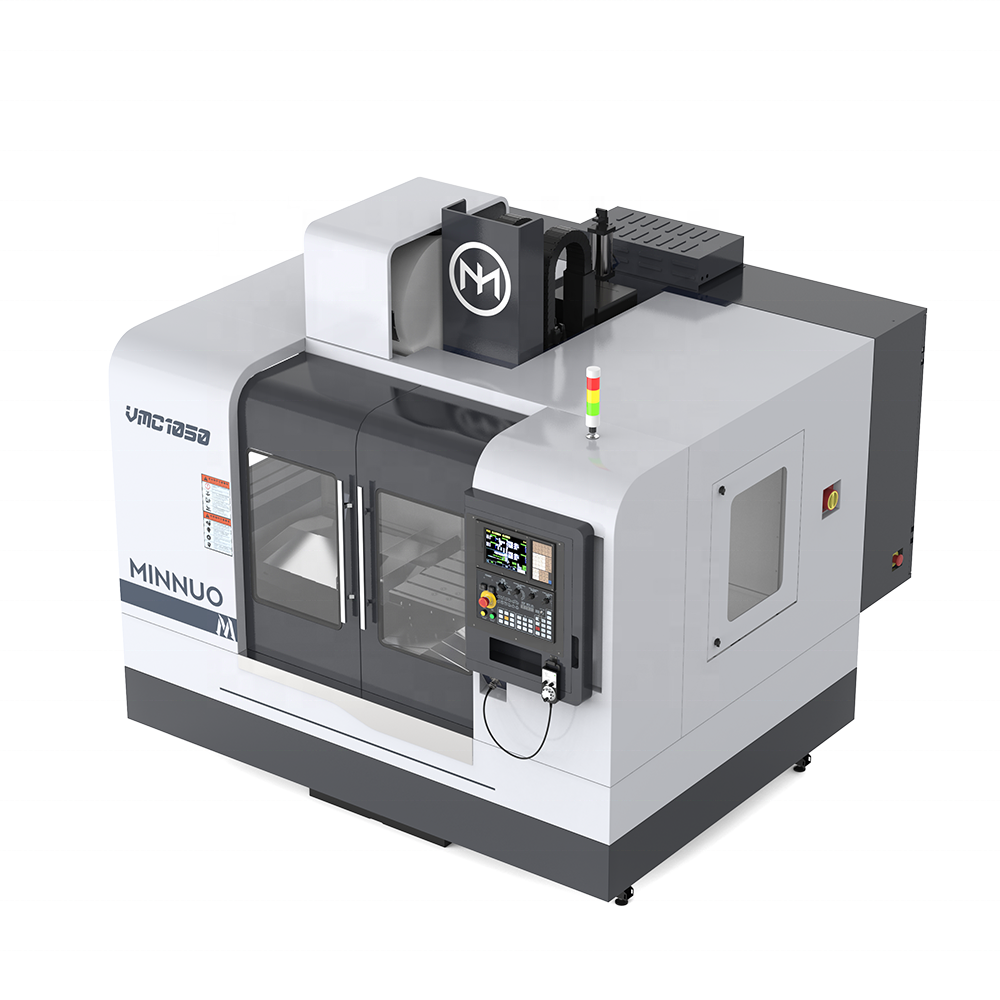
There is a machine tool that sits at the center of modern manufacturing — one that shapes the components found in aircraft engines, automotive transmissions, medical implants, injection molds, hydraulic valves, and smartphone housings. It is not the most glamorous machine in the factory, but it is arguably the most important: the CNC Vertical Machining Center (VMC).
The VMC is the universal precision metal cutting machine — capable of milling complex 3D surfaces, drilling precise holes, boring accurate bores, and tapping threads, all in a single setup, under computer numerical control, with repeatability measured in microns. A well-specified VMC with the right control system can produce virtually any prismatic metal component that modern industry requires.
And the control system that runs more VMCs than any other in the world — the system that operators, programmers, and maintenance technicians on every continent are trained on — is Fanuc. The combination of a capable VMC platform with Fanuc CNC control, further optimized through after-sales improvement, represents one of the most reliable and versatile precision machining investments available.
At $110,357, this CNC Milling Machine Fanuc System VMC is positioned in the mid-range of the global VMC market — above entry-level machines that compromise on rigidity and accuracy, and below the premium European and Japanese machines that command 3–5× the price for incremental performance gains that most applications don’t require.
Understanding CNC Vertical Machining Centers
What Is a VMC?
A Vertical Machining Center is a CNC machine tool where the spindle axis is oriented vertically — perpendicular to the worktable. The cutting tool rotates in the vertical spindle and moves in three linear axes (X, Y, Z) to cut material from a workpiece clamped to the table.
The three primary axes:
- X-axis: Left-right movement of the table (or spindle)
- Y-axis: Front-back movement of the table (or spindle)
- Z-axis: Up-down movement of the spindle (depth of cut)
Optional additional axes:
- 4th axis (A or B): Rotary axis — rotates the workpiece for multi-face machining
- 5th axis: Second rotary axis — enables full 5-axis simultaneous machining
The vertical spindle orientation makes VMCs ideal for machining the top face of workpieces — the most common machining requirement in general engineering. For machining the sides of tall workpieces, horizontal machining centers (HMCs) are preferred, but VMCs handle the vast majority of general precision engineering work.
VMC vs. CNC Milling Machine: The Distinction
The terms “CNC milling machine” and “VMC” are often used interchangeably, but there is a technical distinction:
CNC milling machine (knee mill or bed mill):
- Simpler structure — table moves in X and Y, knee moves in Z
- Lower rigidity — less suitable for heavy cuts
- Typically lower cost
- Suitable for: Light machining, prototyping, small shops
Vertical Machining Center (VMC):
- Box-column or C-frame structure — higher rigidity
- Automatic Tool Changer (ATC) — changes tools automatically without operator intervention
- Pallet changer option — enables continuous production
- Higher spindle speeds and power
- Suitable for: Production machining, precision work, complex parts
The VMC’s Automatic Tool Changer is the key differentiator — it enables a single setup to perform multiple operations (milling, drilling, boring, tapping) with different tools, automatically, without stopping the machine. This dramatically reduces setup time and enables complex parts to be completed in a single operation.
The Fanuc Control System: Why It Dominates Global CNC
Fanuc’s Market Position
Fanuc Corporation (Japan) is the world’s largest manufacturer of CNC systems, with over 4 million CNC systems installed globally. In the VMC market, Fanuc controls approximately 60–70% of the global installed base — making it the de facto standard for CNC machining worldwide.
Why Fanuc dominates:
Reliability: Fanuc CNC systems are legendary for reliability. MTBF (Mean Time Between Failures) of 10+ years is common. Fanuc’s own factories run Fanuc-controlled machines 24/7 with minimal maintenance — a powerful demonstration of the system’s durability.
Global support network: Fanuc has service centers, spare parts warehouses, and trained technicians in 100+ countries. Wherever your factory is located, Fanuc support is accessible — critical for minimizing downtime when problems occur.
Operator familiarity: Because Fanuc is so widely deployed, the global pool of CNC operators, programmers, and maintenance technicians trained on Fanuc is enormous. Hiring skilled Fanuc operators is far easier than finding operators trained on proprietary or less common control systems.
CAM software compatibility: Every major CAM software package (Mastercam, Hypermill, PowerMill, Siemens NX CAM, Fusion 360, SolidCAM) has proven Fanuc post-processors — the software that converts CAM toolpaths into Fanuc G-code. No compatibility issues, no custom post-processor development required.
Spare parts availability: Fanuc spare parts are available globally, with short lead times. Third-party spare parts suppliers also stock Fanuc components, providing competitive pricing options.
Fanuc CNC Series for VMCs
Fanuc offers several CNC series for VMC applications:
Fanuc 0i-MF Plus
- Entry to mid-range VMC control
- 3-axis standard, 4/5-axis optional
- 15″ color touchscreen display
- Nano-interpolation for smooth surface finish
- Most common Fanuc series on mid-range VMCs
Fanuc 30i/31i/32i-B
- High-performance series for demanding applications
- 5-axis simultaneous machining
- AI contour control for high-speed machining
- Advanced thermal compensation
- Used on premium VMCs and 5-axis machining centers
Fanuc 35i-B
- Compact high-performance series
- Combines 30i performance in smaller package
- Suitable for compact VMCs and multi-axis machines
Confirm the specific Fanuc series installed on this machine with the supplier — the series determines the available features and programming capabilities.
Key Fanuc Features for VMC Operation
Nano-interpolation: Fanuc’s nano-interpolation divides programmed moves into nanometer-scale increments, producing smoother surface finishes and more accurate contours than conventional interpolation. Critical for mold and die machining where surface finish directly affects part quality.
AI Contour Control (AICC): AICC reads ahead in the part program and pre-calculates the optimal feed rate for each segment of the toolpath — maintaining maximum feed rate on straight sections while automatically slowing for corners and tight curves. Result: 20–40% faster cycle times on complex contoured parts.
Thermal compensation: CNC machines expand and contract as they heat up during operation. Fanuc’s thermal compensation system measures machine temperature at multiple points and automatically adjusts axis positions to compensate for thermal growth — maintaining accuracy throughout the production shift.
High-speed machining: Fanuc’s look-ahead function reads multiple blocks ahead in the program and optimizes acceleration/deceleration for smooth, high-speed motion — enabling high-speed machining (HSM) strategies that dramatically reduce cycle times on complex parts.
Rigid tapping: Synchronized spindle and Z-axis motion for tapping without a floating tap holder — enables faster tapping speeds and better thread quality than conventional tapping.
After-Sales Improvement: What It Means and Why It Matters
Understanding “After-Sales Improvement”
The “after-sales improvement” designation indicates that this machine has undergone post-delivery optimization and enhancement — a process that addresses the gap between a machine’s factory specification and its real-world performance after initial use.
What after-sales improvement typically includes:
Geometric accuracy restoration:
- Ballscrew backlash measurement and compensation
- Linear axis straightness and squareness verification and correction
- Spindle runout measurement and correction
- Leveling and alignment verification
Fanuc parameter optimization:
- Servo gain tuning for optimal axis response
- Acceleration/deceleration parameter optimization
- Spindle orientation and rigid tapping parameter tuning
- Thermal compensation parameter calibration
Mechanical inspection and repair:
- Spindle bearing inspection and replacement if needed
- Ballscrew and linear guide inspection
- ATC mechanism inspection and adjustment
- Coolant system inspection and cleaning
Electrical system check:
- Servo drive and spindle drive inspection
- Electrical cabinet cleaning and connection tightening
- Safety system verification
Result: A machine that performs at or near its original specification — often better than a new machine that hasn’t been properly commissioned and tuned.
Why After-Sales Improvement Adds Value
New CNC machines from the factory are not always perfectly tuned. The commissioning process at the customer’s site — leveling, parameter tuning, and calibration — significantly affects real-world performance. After-sales improvement ensures this process has been completed properly, delivering a machine that is ready to produce accurate parts from day one.
For buyers sourcing machines through global channels, after-sales improvement provides additional assurance that the machine has been inspected, tested, and optimized before shipment — reducing the risk of receiving a machine that requires significant on-site work before it can produce to specification.
VMC Technical Specifications: What to Evaluate
When comparing VMC specifications, these are the key parameters:
Table Size and Travel
Table size: The physical dimensions of the worktable (length × width). Determines the maximum workpiece size that can be clamped.
Travel (X × Y × Z): The distance each axis can move. Determines the maximum workpiece envelope that can be machined.
Typical mid-range VMC travels:
- Small VMC: 600 × 400 × 500mm
- Medium VMC: 800 × 500 × 600mm (most common)
- Large VMC: 1,000 × 600 × 700mm or larger
Table load capacity: Maximum workpiece weight the table can support. Typically 500–1,500 kg for mid-range VMCs.
Spindle Specifications
Spindle speed: Maximum RPM. Higher speed enables faster cutting of aluminum and non-ferrous materials.
- Standard: 8,000–10,000 RPM
- High-speed: 12,000–15,000 RPM
- Ultra-high-speed: 20,000–40,000 RPM (for aluminum and graphite)
Spindle power: Motor power in kW. Higher power enables heavier cuts in steel and hard materials.
- Standard: 7.5–15 kW
- High-power: 18–30 kW
Spindle taper: The tool holder interface.
- BT40: Most common for mid-range VMCs — good balance of rigidity and tool change speed
- BT50: Larger, more rigid — for heavy cutting applications
- HSK-A63: High-speed interface — better for high-speed machining
Spindle bearing: Determines maximum speed and thermal stability.
- Angular contact ball bearings: Standard for most VMCs
- Ceramic hybrid bearings: For high-speed spindles
Feed Rate and Rapid Traverse
Rapid traverse: Maximum axis speed when not cutting. Higher rapid traverse reduces non-cutting time.
- Standard: 24–36 m/min
- High-speed: 48–60 m/min
Cutting feed rate: Maximum feed rate during cutting. Typically 1–10 m/min depending on material and operation.
Automatic Tool Changer (ATC)
Tool capacity: Number of tools in the magazine.
- Standard: 20–24 tools
- Extended: 30–40 tools
- Large: 60–120 tools
Tool change time: Time to change from one tool to another (chip-to-chip time).
- Standard: 3–5 seconds
- Fast: 1.5–3 seconds
Maximum tool diameter and length: Determines the largest tools that can be stored in the magazine.
Accuracy Specifications
Positioning accuracy: The accuracy with which the machine can move to a commanded position.
- Standard: ±0.005mm (5 microns)
- High accuracy: ±0.003mm (3 microns)
- Precision: ±0.001mm (1 micron)
Repeatability: The consistency of returning to the same position repeatedly.
- Standard: ±0.003mm
- High accuracy: ±0.001mm
Applications: What the Fanuc VMC Produces
Mold and Die Manufacturing
Mold and die making is one of the most demanding VMC applications — requiring high accuracy, excellent surface finish, and the ability to machine complex 3D surfaces in hardened tool steel:
Injection molds:
- Plastic injection molds for consumer products, automotive parts, electronics housings
- Material: P20, H13, S136 tool steel (30–52 HRC)
- Tolerances: ±0.01–0.02mm
- Surface finish: Ra 0.4–0.8 μm (mirror finish after polishing)
Die casting dies:
- Aluminum and zinc die casting dies
- Material: H13 hot work tool steel
- High thermal fatigue resistance required
Stamping dies:
- Sheet metal stamping dies for automotive and appliance parts
- Material: D2, Cr12MoV cold work tool steel
VMC role in mold making:
- Rough milling of mold cavity and core
- Semi-finish milling to near-net shape
- Finish milling of complex 3D surfaces
- Drilling of cooling channels, ejector pin holes, and gate locations
- EDM electrode machining (graphite and copper)
Aerospace Component Machining
Aerospace machining demands the highest levels of accuracy, material traceability, and process documentation:
Structural components:
- Aluminum alloy frames, brackets, and fittings (7075, 6061 aluminum)
- Titanium structural components (Ti-6Al-4V)
- Stainless steel fittings and fasteners
Engine components:
- Compressor and turbine blade fixtures
- Engine case components
- Fuel system components
Tolerances: ±0.005–0.025mm typical Surface finish: Ra 0.8–3.2 μm typical
Automotive Parts Production
Automotive manufacturing requires high-volume, consistent production of precision components:
Powertrain components:
- Engine blocks and cylinder heads (aluminum)
- Transmission housings and cases
- Differential and axle components
Chassis and suspension:
- Steering knuckles and uprights
- Suspension arms and brackets
- Brake caliper bodies
Tolerances: ±0.01–0.05mm typical Production volume: 100–10,000 parts per month
Medical Device Manufacturing
Medical device machining requires exceptional accuracy, surface finish, and material traceability:
Implants:
- Orthopedic implants (hip, knee, spine) in titanium and cobalt-chrome
- Dental implants and abutments
- Surgical instruments
Equipment components:
- Diagnostic equipment housings
- Surgical robot components
- Medical imaging equipment parts
Tolerances: ±0.005–0.01mm typical Surface finish: Ra 0.2–0.8 μm typical Material traceability: Full material certification required
ROI Analysis: The Economics of VMC Investment
Investment: $110,357
Revenue Generation
Contract machining (job shop):
- VMC utilization: 16 hours/day, 300 days/year = 4,800 hours/year
- Hourly machine rate: $50–$100/hour (depending on market)
- Annual revenue: $240,000–$480,000
In-house production (replacing outsourced machining):
- Outsourced machining cost: $80–$150/hour
- In-house cost (amortization + labor + overhead): $30–$50/hour
- Saving per hour: $30–$100
- Annual saving (4,800 hours): $144,000–$480,000
Payback Period
Job shop scenario:
- Annual revenue: $300,000 (conservative)
- Operating cost (labor, tooling, overhead): $120,000
- Annual profit: $180,000
- Payback: 7–8 months
In-house production scenario:
- Annual machining cost saving: $200,000
- Payback: 6–7 months
Long-Term Value
A well-maintained Fanuc VMC has an operational life of 15–25 years. At $110,357 capital cost and $180,000+ annual profit, the machine generates $2.7–4.5 million in cumulative profit over its operational life — a return of 25–40× the initial investment.
Featured Product: Fanuc VMC on MEGA BDM
MEGA BDM has sourced and verified the CNC Milling Machine Fanuc System VMC — After-Sales Improvement Vertical Machining Center from a verified global CNC machine tool supplier with proven VMC manufacturing and export experience across Asia, the Middle East, Southeast Asia, and international markets.
👉 View the Fanuc VMC on MEGA BDM
Frequently Asked Questions
What specific Fanuc series is installed on this machine?
Confirm the specific Fanuc CNC series (0i-MF, 30i, 31i, etc.) with the supplier. The series determines available features, programming capabilities, and compatibility with your existing CAM software post-processors.
What are the table size and axis travel dimensions?
Confirm the specific table size (L × W) and axis travel (X × Y × Z) with the supplier for your workpiece size requirements. These are the primary specifications that determine whether the machine can accommodate your parts.
What spindle speed and power does the machine have?
Confirm spindle speed (RPM), power (kW), and taper (BT40/BT50/HSK) with the supplier for your material and cutting requirements. Aluminum machining benefits from higher spindle speeds; steel machining requires higher torque.
What does “after-sales improvement” specifically include for this machine?
Request a detailed list of the improvements performed from the supplier — including any parts replaced, calibration performed, and accuracy verification results. This documentation is important for understanding the machine’s current condition and performance.
What is the positioning accuracy and repeatability?
Confirm the positioning accuracy (±mm) and repeatability (±mm) with the supplier. Request the machine’s accuracy test report (ISO 10791 or equivalent) if available.
What warranty is provided?
Confirm the warranty terms with the supplier — duration, what is covered, and how warranty service is provided. For machines sourced internationally, confirm the warranty service process for your location.
Conclusion
The CNC Milling Machine with Fanuc System VMC combines the world’s most trusted CNC control system with the versatility of a vertical machining center and the assurance of after-sales improvement — delivering a precision machining platform that is ready to produce accurate, complex parts from day one.
At $110,357, this machine is positioned to deliver exceptional value for job shops, mold makers, automotive suppliers, aerospace subcontractors, and general precision engineering operations that need proven Fanuc reliability, global support infrastructure, and the flexibility to machine virtually any prismatic component that modern industry demands.
With payback periods of 6–8 months and operational lives of 15–25 years, a well-specified Fanuc VMC is one of the highest-ROI capital investments available to precision manufacturing businesses — the machine that makes everything else possible.
👉 View the full product details on MEGA BDM