
Price Range
| Weight Class | Price Range (FOB China) |
|---|---|
| 1,000kg mini excavator | $8,000 – $15,000 USD |
| 1,500kg mini excavator | $12,000 – $20,000 USD |
| 2,000kg mini excavator | $16,000 – $28,000 USD |
| 2,500kg mini excavator | $20,000 – $35,000 USD |
Prices vary based on engine brand, certification level, cab type, and included attachments. Name-brand engine variants command a 20–40% premium over Chinese engine equivalents.
Introduction: The Rise of the Mini Excavator
In construction, landscaping, agriculture, and urban development, the mini excavator has become one of the most indispensable pieces of machinery on the job site. Compact, powerful, and remarkably versatile, small diggers in the 1,000kg to 2,500kg operating weight class have transformed how contractors approach earthmoving, trenching, demolition, and site preparation — especially in tight spaces where full-size excavators simply cannot operate.
Whether you are a contractor expanding your equipment fleet, a developer sourcing machinery for a new project, or an importer building a construction equipment distribution business, this guide gives you everything you need to make a confident, informed purchasing decision.
What Is a Mini Excavator?
A mini excavator — also called a compact excavator or small digger — is a tracked or wheeled earthmoving machine with an operating weight typically between 1,000kg and 6,000kg. This guide focuses on the 1,000kg to 2,500kg class, which represents the most popular segment for small contractors, landscapers, and urban construction projects.
Key components include:
- Undercarriage — rubber or steel tracks for mobility across varied terrain
- Swing boom — allows the arm to rotate independently of the undercarriage (zero tail swing models available)
- Boom and arm (dipper) — the main excavating linkage
- Bucket — the digging attachment (interchangeable with other tools)
- Cab or ROPS frame — operator station with controls
- Engine — diesel powered in virtually all commercial models
- Hydraulic system — powers all movement and attachment functions
Why Choose a 1,000kg–2,500kg Mini Excavator?
This weight class hits the sweet spot for a wide range of applications:
Compact enough to:
- Access through standard gates and doorways (some models)
- Work in confined urban spaces and narrow trenches
- Transport on a standard trailer without a heavy vehicle license
- Operate indoors or in low-clearance environments
Powerful enough to:
- Dig to depths of 1.5m–2.5m depending on model
- Handle standard soil, clay, gravel, and soft rock
- Operate hydraulic attachments — breakers, augers, grapples, compactors
- Complete foundation, drainage, and utility trenching work efficiently
CE & ISO Certified: Why Certification Matters
The featured product carries both CE certification (required for sale in European markets) and ISO certification (international quality management standard). For buyers, this means:
- CE marking confirms the machine meets EU safety, health, and environmental requirements — essential for import into Europe
- ISO 9001 confirms the manufacturer operates a documented quality management system
- Huaya brand — a recognized Chinese manufacturer with established export credentials
When sourcing construction machinery globally, always prioritize certified manufacturers. Uncertified machines may be cheaper upfront but create significant liability, import compliance, and resale problems.
Key Technical Specifications Explained
Operating Weight
The total weight of the machine including standard equipment. For this class: 1,000kg / 1,500kg / 2,000kg / 2,500kg variants available. Heavier machines generally offer more digging force and stability but are less portable.
Engine Power
Mini excavators in this class typically use 10–20kW (13–27HP) diesel engines. Common engine brands: Yanmar, Kubota, Perkins, Mitsubishi, or Chinese equivalents (Xinchai, Changchai). Name-brand engines command a premium but offer better fuel efficiency, reliability, and global parts availability.
Max Digging Depth
The maximum vertical depth the bucket can reach below ground level. Typical range for this class: 1,500mm–2,500mm. Critical for drainage, foundation, and utility work.
Max Digging Reach
Horizontal reach from the center of the machine to the bucket tip. Typical: 3,000mm–4,500mm. Important for working from the edge of trenches or over obstacles.
Bucket Capacity
Standard bucket capacity for this class: 0.025m³–0.08m³. Larger buckets move more material per cycle but require more hydraulic force.
Hydraulic Flow
Determines which attachments can be powered and at what performance level. Look for machines with auxiliary hydraulic lines for attachment compatibility.
Tail Swing
- Conventional tail swing — counterweight extends beyond the track width when rotating
- Zero tail swing (ZTS) — counterweight stays within track width — essential for working in confined spaces
Blade
Most models include a dozer blade at the front for backfilling, leveling, and pushing material.
Variants: Choosing the Right Weight Class
| Model | Operating Weight | Best For |
|---|---|---|
| 1,000kg | Lightest, most portable | Indoor work, tight access, landscaping |
| 1,500kg | Balanced portability and power | General contractor use, trenching |
| 2,000kg | More digging force | Foundation work, harder soils |
| 2,500kg | Maximum power in class | Heavier earthmoving, demolition support |
For most small contractors, the 1,500kg–2,000kg range offers the best balance of capability and transportability.
Attachments: Multiplying the Machine’s Value
One of the greatest advantages of a mini excavator is its ability to accept a wide range of hydraulic attachments, transforming it from a digger into a multi-purpose machine:
- Hydraulic breaker / hammer — concrete and rock demolition
- Auger — post holes, piling, tree planting
- Grapple — material handling, log and debris sorting
- Compactor plate — trench backfill compaction
- Tilt bucket — grading and slope work
- Ripper tooth — breaking hard ground
- Grading blade — fine leveling and finishing
- Thumb attachment — picking and placing irregular objects
Confirm the machine’s auxiliary hydraulic flow and pressure specifications match your intended attachments before purchasing.
Applications & Industries
Mini excavators in the 1,000kg–2,500kg class are used across a remarkably wide range of sectors:
- Residential construction — foundation excavation, drainage, utility trenching, pool installation
- Landscaping — garden shaping, pond digging, tree removal, irrigation trenching
- Civil infrastructure — road maintenance, kerb and gutter work, cable laying
- Agriculture — irrigation channels, drainage ditches, land clearing
- Demolition — interior demolition, concrete breaking, structure removal
- Rental industry — high-demand rental equipment for contractors and homeowners
- Mining & quarrying — small-scale earthmoving, access road maintenance
- Urban construction — confined site work, basement excavation, utility repair
Operating & Safety Considerations
Operator Training
Mini excavators require trained operators. Most countries require a plant operator certificate or equivalent qualification for commercial use. Ensure your team is properly trained before deployment.
Ground Conditions
Check ground bearing capacity before operating. Soft or waterlogged ground may require ground protection mats. Slopes should not exceed the manufacturer’s rated gradient (typically 15–30°).
Overhead Hazards
Always check for overhead power lines, pipes, and structures before operating. Maintain safe clearance distances at all times.
Maintenance Schedule
Key maintenance items:
- Engine oil and filter — every 250 hours
- Hydraulic oil and filter — every 500–1,000 hours
- Track tension — check weekly
- Greasing of pins and bushings — daily
- Air filter — check weekly, replace as needed
Sourcing from Global Manufacturers
China dominates global mini excavator manufacturing, with major production clusters in Shandong, Hunan, Jiangsu, and Zhejiang provinces. Brands like Huaya, Kubota (China), XCMG, SANY, Liugong, and Yuchai export to markets worldwide.
What to Look for in a Supplier
- CE and ISO certification — non-negotiable for EU markets; strongly recommended for all markets
- Established export history — request references from buyers in your region
- Spare parts availability — confirm parts can be sourced locally or shipped within acceptable lead times
- After-sales support — remote technical support, training videos, and manuals in your language
- Warranty — minimum 12 months on machine; 6 months on wear parts
- Factory audit — request a virtual or in-person factory visit for large orders
Shipping Considerations
Mini excavators in this class ship via RoRo (Roll-on Roll-off) vessel or flat rack container. A 2,500kg machine typically fits in a 20ft open-top or flat rack container. Factor in:
- Ocean freight and marine insurance
- Import duties (HS code: 8429.52 for hydraulic excavators)
- Port handling, customs clearance, and quarantine (if applicable)
- Inland transport to job site or depot
- Pre-delivery inspection and commissioning
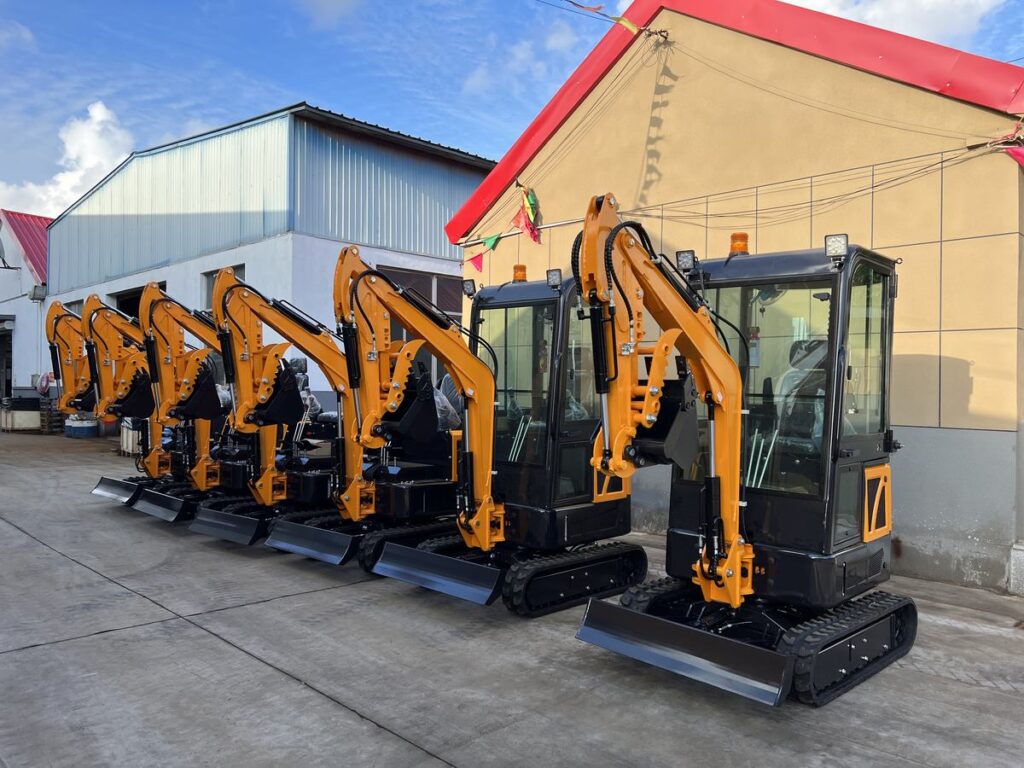
Featured Product: CE & ISO Certified Huaya Mini Excavator 1,000kg–2,500kg
MEGA BDM has sourced and verified the CE & ISO certified Huaya High Quality Small Digger — available in 1,000kg, 1,500kg, 2,000kg, and 2,500kg configurations — from a trusted global manufacturer with proven export credentials.
This machine is built for contractors and importers who need reliable, certified compact excavation equipment at a competitive price point, backed by a manufacturer with international quality standards.
👉 View the Huaya Mini Excavator on MEGA BDM
Need bulk pricing, specific weight class configurations, attachment packages, or a sourcing agent to coordinate your order?
Frequently Asked Questions
Do I need a license to operate a mini excavator?
Requirements vary by country. In most markets, a plant operator certificate or construction equipment license is required for commercial use. Check your local regulations before deployment.
Can a mini excavator be transported on a standard trailer?
Yes — machines in the 1,000kg–2,500kg class can typically be transported on a standard plant trailer towed by a pickup truck or light commercial vehicle, depending on local road regulations.
What is the fuel consumption of a 1,000kg–2,500kg mini excavator?
Typical fuel consumption: 1.5–4 liters of diesel per hour depending on engine size and workload intensity.
How deep can a 2,500kg mini excavator dig?
Most 2,500kg class machines achieve a maximum digging depth of 2,200mm–2,800mm with a standard arm configuration. Extended arm options can increase this further.
What is zero tail swing and do I need it?
Zero tail swing (ZTS) means the counterweight does not extend beyond the track width when the upper structure rotates. It is essential for working in confined spaces — alongside walls, in trenches, or in urban environments. If you work in tight spaces regularly, specify ZTS.
How long is the warranty on a Huaya mini excavator?
Warranty terms vary by supplier and configuration. Typically 12 months on the machine and 6 months on wear parts. Confirm warranty terms and spare parts availability with the supplier before ordering.
Conclusion
The mini excavator in the 1,000kg–2,500kg class is one of the most versatile and in-demand pieces of construction equipment in the world today. Its combination of compact size, genuine digging capability, and attachment versatility makes it a must-have for contractors, landscapers, and developers operating across residential, commercial, and infrastructure sectors.
With CE and ISO certification, the Huaya mini excavator range offers buyers the confidence of internationally recognized quality standards at a competitive price point — sourced and verified by MEGA BDM’s global procurement network.
👉 View the Huaya Mini Excavator on MEGA BDM and contact our sourcing team to discuss your requirements.