Introduction: Why Compact Loaders Are Transforming Job Sites
The construction and industrial equipment market has seen explosive growth in demand for compact, versatile, and powerful loading machines. Traditional full-size wheel loaders are increasingly being replaced — or supplemented — by compact crawler hydraulic mini loaders that can do more work in less space, with lower operating costs and greater attachment flexibility.
The 3 to 4.5 ton compact crawler hydraulic diesel mini loader sits at the heart of this revolution. ISO and Huaya certified, diesel-powered, and built for demanding job site conditions, this class of machine is rapidly becoming the go-to choice for contractors, quarry operators, agricultural businesses, and equipment importers worldwide.
This guide covers everything you need to know before buying.
Price Range
| Weight Class | Price Range (FOB China) |
|---|---|
| 3 ton compact crawler loader | $18,000 – $30,000 USD |
| 3.5 ton compact crawler loader | $22,000 – $36,000 USD |
| 4 ton compact crawler loader | $26,000 – $42,000 USD |
| 4.5 ton compact crawler loader | $30,000 – $50,000 USD |
What Is a Compact Crawler Hydraulic Mini Loader?
A compact crawler hydraulic mini loader is a tracked, diesel-powered machine that uses a hydraulic system to operate a front-mounted loader arm and a wide range of interchangeable attachments. Unlike wheeled skid steer loaders, crawler mini loaders use rubber tracks for superior traction, lower ground pressure, and better performance on soft, uneven, or sloped terrain.
Key components:
- Rubber track undercarriage — low ground pressure, excellent traction on all terrain types
- Diesel engine — independent power source, no grid required
- Hydraulic loader arm — front-mounted boom for lifting, pushing, and attachment operation
- Quick-attach coupler — fast attachment changes without tools
- Operator cab or ROPS frame — enclosed or open station depending on model
- Auxiliary hydraulic lines — powers hydraulic attachments
The result is a machine that combines the traction of an excavator undercarriage with the loading versatility of a skid steer — making it uniquely capable across a wide range of applications.
ISO & Huaya Certified: What It Means for Buyers
The ISO certification on this machine confirms the manufacturer operates under internationally recognized quality management standards (ISO 9001). For buyers, this means:
- Consistent manufacturing quality across production batches
- Documented quality control processes
- Traceability of components and materials
- Credibility for import compliance in regulated markets
Huaya is an established Chinese construction equipment manufacturer with a proven export track record across Southeast Asia, the Middle East, Africa, and Europe. Their machines are built for real-world job site conditions — not just showroom specifications.
3 Ton vs 3.5 Ton vs 4 Ton vs 4.5 Ton: Choosing the Right Size
The operating weight directly affects the machine’s capability, portability, and cost:
| Weight Class | Tipping Load | Best Application |
|---|---|---|
| 3 ton | ~1,200–1,500kg | Landscaping, light construction, indoor work |
| 3.5 ton | ~1,400–1,800kg | General contractor use, agriculture, nurseries |
| 4 ton | ~1,600–2,000kg | Heavier earthmoving, quarry support, demolition |
| 4.5 ton | ~1,800–2,200kg | Maximum capacity in class, industrial applications |
Prices vary based on engine brand, cab type, attachment package, and certification level. Name-brand engine variants (Yanmar, Kubota, Perkins) command a 25–40% premium.
Rated Operating Capacity (ROC) is typically 35–50% of tipping load — the safe working load for normal operations. Always confirm ROC, not just tipping load, when comparing machines.
Key Technical Specifications to Evaluate
Engine
Diesel engines in this class typically range from 25–55kW (33–74HP). Look for:
- Name-brand engines: Yanmar, Kubota, Perkins, Deutz — better fuel efficiency, global parts availability
- Chinese engines: Xinchai, Changchai, Weichai — lower cost, adequate for most applications
- Tier 4 / Stage V compliance — required for sale in EU and North American markets
Hydraulic System
The hydraulic system is the heart of the machine. Key specs:
- System pressure: 200–280 bar typical
- Hydraulic flow: 60–120 L/min — higher flow enables faster attachment operation
- Auxiliary lines: Confirm single-acting or double-acting auxiliary circuits for attachment compatibility
Track Width & Ground Pressure
Wider tracks = lower ground pressure = better performance on soft ground. For sensitive surfaces (turf, finished floors), rubber tracks are essential. Ground pressure for this class: typically 25–45 kPa — significantly lower than wheeled machines.
Lift Height
Maximum height the loader arm can raise the bucket or attachment. Typical for this class: 2,500–3,200mm. Critical for loading trucks or working at height.
Breakout Force
The force the bucket can exert when digging into material. Higher breakout force = better performance in hard or compacted ground. Typical: 20–40 kN for this class.
Travel Speed
Typical: 5–10 km/h. Faster travel speed improves productivity on larger sites. Most machines have two-speed travel (tortoise/hare mode).
Machine Width
Compact models can be as narrow as 900–1,200mm — critical for access through gates, doorways, and narrow passages.
Attachments: The Key to Maximum Versatility
The compact crawler mini loader’s greatest strength is its ability to accept dozens of different attachments via a universal quick-attach coupler. This transforms one machine into an entire fleet:
Earthmoving & Loading:
- General purpose bucket
- 4-in-1 combination bucket (doze, scrape, grab, load)
- High-tip bucket
- Rock bucket with bolt-on cutting edge
Demolition & Breaking:
- Hydraulic breaker / hammer
- Concrete crusher / pulverizer
- Rotating grapple
Agriculture & Landscaping:
- Pallet forks
- Bale spear / hay fork
- Rotary tiller / cultivator
- Landscape rake
- Stump grinder
Construction:
- Auger (post holes, piling)
- Compactor plate
- Trencher
- Concrete mixer bucket
- Snow blower / snow pusher
Material Handling:
- Pallet forks
- Log grapple
- Scrap / waste grapple
- Concrete bucket
Confirm hydraulic flow and pressure requirements for each attachment against the machine’s specifications before purchasing.
Crawler vs. Wheeled Mini Loader: Which Is Right for You?
| Feature | Crawler Mini Loader | Wheeled Skid Steer |
|---|---|---|
| Traction | Excellent — all terrain | Good — firm surfaces |
| Ground pressure | Low — soft ground capable | Higher |
| Surface damage | Minimal (rubber tracks) | More on soft surfaces |
| Speed | Slower | Faster |
| Stability on slopes | Superior | Good |
| Turning radius | Zero — pivot turn | Zero — skid turn |
| Surface scarring | Less | More (skid steering) |
| Maintenance | Tracks wear over time | Tires wear, puncture risk |
| Best environment | Soft ground, slopes, sensitive surfaces | Hard surfaces, high-speed work |
For construction sites, agricultural land, landscaping, and uneven terrain — the crawler wins. For warehouse, paved surfaces, and high-speed material handling — wheeled machines have the edge.
Applications & Industries
The 3–4.5 ton compact crawler hydraulic mini loader is used across an exceptionally wide range of sectors:
- Construction — site preparation, material handling, backfilling, demolition support
- Landscaping — earthmoving, turf laying, tree planting, pond construction
- Agriculture — barn cleaning, feed handling, land clearing, irrigation work
- Quarrying & mining — small-scale material loading, site maintenance
- Forestry — log handling, land clearing, stump removal
- Waste management — scrap handling, waste sorting, recycling yards
- Rental industry — high-demand rental equipment for diverse contractor needs
- Municipal works — road maintenance, park maintenance, snow removal
- Demolition — interior strip-out, concrete breaking, debris removal
Production Workflow: How Contractors Use This Machine
Understanding typical workflows helps you assess the right configuration:
- Site preparation — clear vegetation, topsoil stripping, rough grading with bucket
- Excavation support — load excavated material into trucks or stockpiles
- Material distribution — spread gravel, sand, or fill across the site
- Attachment swap — change to auger for post holes, breaker for concrete, or forks for pallet handling
- Backfilling — push and compact backfill material around foundations or trenches
- Site cleanup — collect and load debris for disposal
A single compact crawler loader with 4–5 attachments can replace multiple specialized machines on smaller sites — dramatically reducing equipment costs.
Sourcing from Global Manufacturers
China dominates global compact loader manufacturing, with Huaya and other established brands exporting to over 50 countries. Key manufacturing regions: Shandong, Hunan, Jiangsu, Zhejiang.
Supplier Evaluation Checklist
- ✔ ISO 9001 certification — confirmed
- ✔ Export history to your target market
- ✔ CE marking (required for EU)
- ✔ Engine brand options available
- ✔ Attachment compatibility confirmed
- ✔ Spare parts availability in your country
- ✔ Warranty terms: minimum 12 months machine, 6 months wear parts
- ✔ After-sales support: remote technical assistance, manuals in your language
- ✔ Factory audit available (virtual or in-person)
Shipping Considerations
Compact crawler loaders in this class ship via RoRo vessel or flat rack / open-top container. A 4.5 ton machine typically fits in a 20ft flat rack container. Factor in:
- Ocean freight and marine insurance
- Import duties (HS code: 8429.51 — front-end shovel loaders)
- Port handling and customs clearance
- Pre-delivery inspection and commissioning at destination
- Inland transport to depot or job site
Featured Product: ISO Huaya 3–4.5 Ton Compact Crawler Hydraulic Diesel Mini Loader
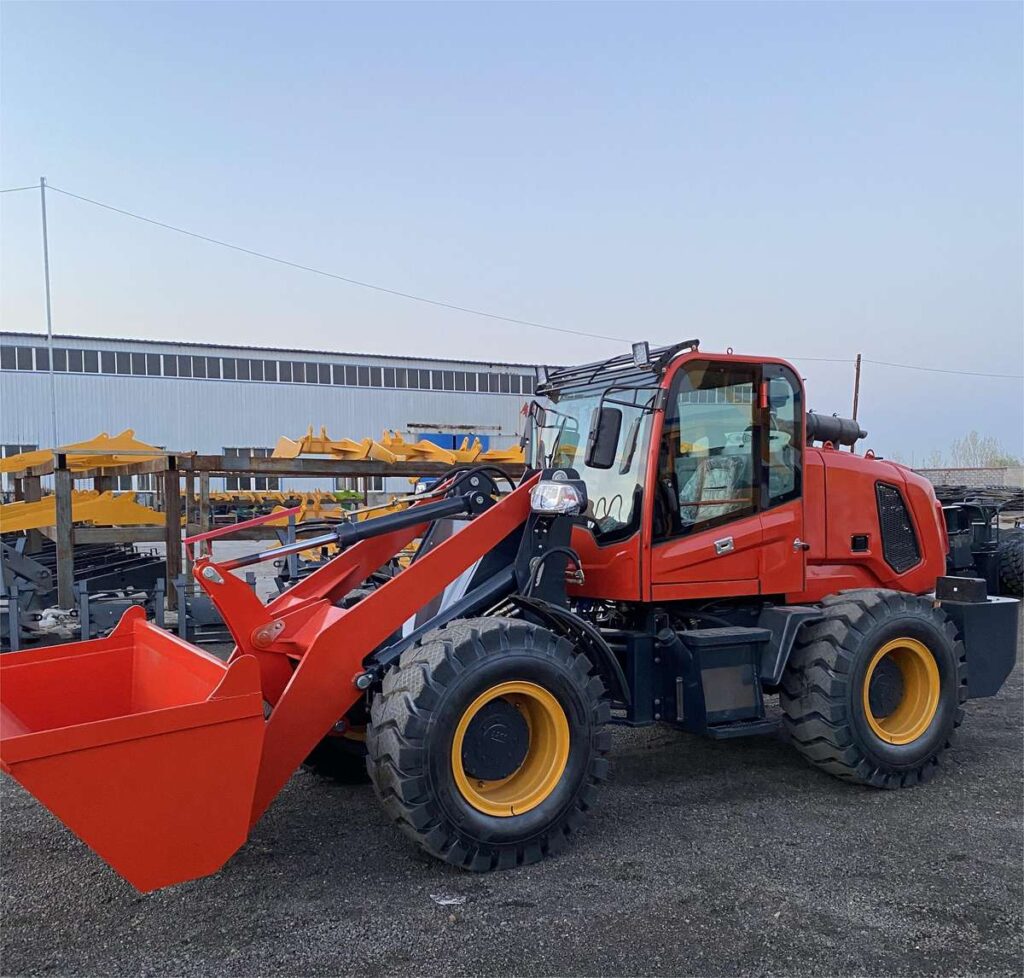
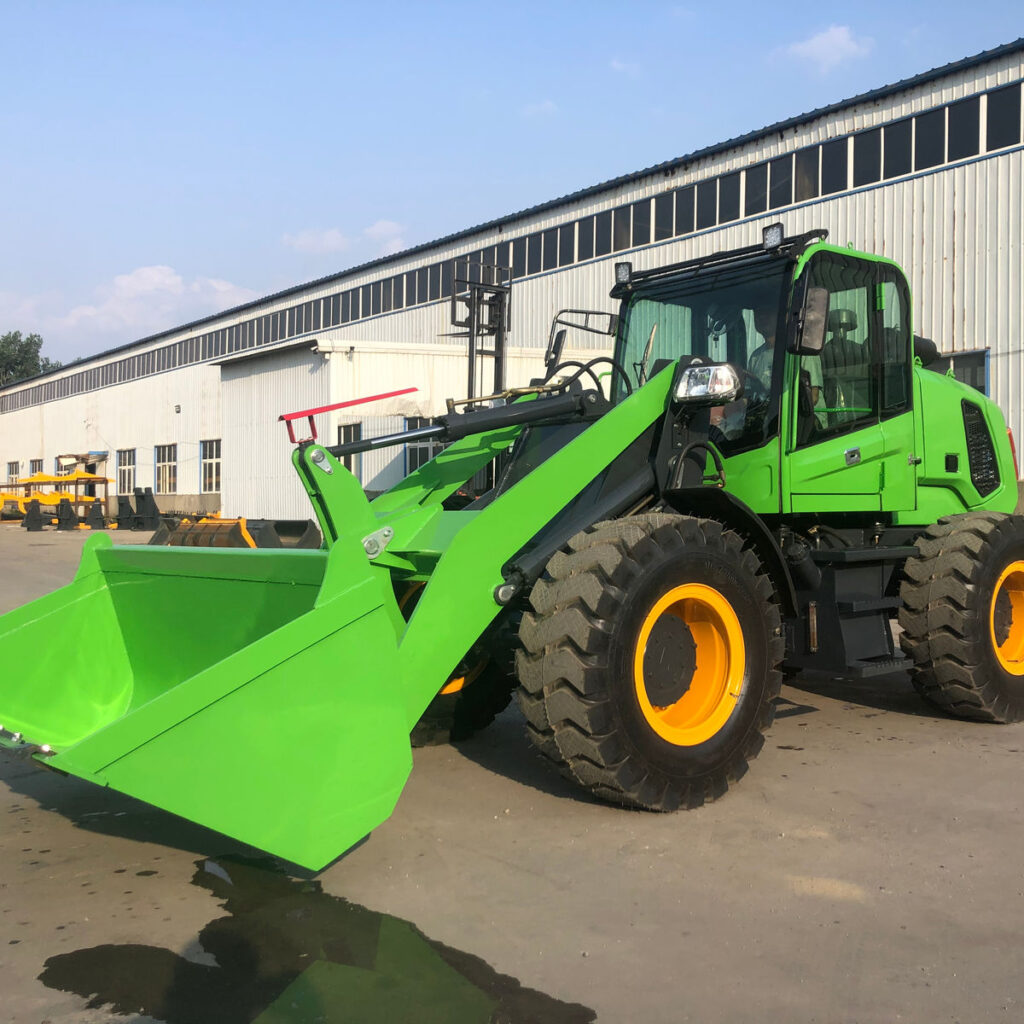
MEGA BDM has sourced and verified the ISO certified Huaya 3, 3.5, 4, and 4.5 ton Compact Crawler Hydraulic Diesel Mini Loader with Attachments — available in multiple weight configurations to match your specific project requirements.
Built to ISO quality standards, diesel-powered, and compatible with a full range of hydraulic attachments, this machine delivers genuine job site performance at a competitive price point backed by MEGA BDM’s global sourcing network.
👉 View the Huaya Compact Crawler Mini Loader on MEGA BDM
Need bulk pricing, specific weight class, engine brand options, attachment packages, or shipping coordination?
Frequently Asked Questions
What is the difference between a mini loader and a skid steer?
A mini loader typically refers to a compact machine with a front loader arm, while a skid steer is a specific design where all wheels (or tracks) on one side turn at the same speed to steer by skidding. Crawler mini loaders use track undercarriages for superior traction and lower ground pressure compared to wheeled skid steers.
Can the machine operate on slopes?
Yes — crawler mini loaders are well-suited for sloped terrain due to their low center of gravity and high-traction track system. Always observe the manufacturer’s rated maximum gradient (typically 20–30°) and never exceed it.
How long do the rubber tracks last?
Rubber track lifespan depends heavily on operating surface and conditions. On soft ground and mixed terrain: 1,500–3,000 hours. On abrasive surfaces like concrete or rock: 800–1,500 hours. Track replacement is a routine maintenance item.
What fuel consumption should I expect?
Typical fuel consumption for this class: 3–8 liters of diesel per hour depending on engine size, load intensity, and operating conditions.
Can one operator run the machine and change attachments?
Yes — the quick-attach coupler system is designed for single-operator attachment changes, typically completed in 2–5 minutes without tools.
Is operator training required?
Yes. Most markets require a plant operator certificate or equivalent qualification for commercial use. Huaya machines come with operator manuals; supplier training videos are typically available.
Conclusion
The 3–4.5 ton compact crawler hydraulic diesel mini loader is one of the most versatile and cost-effective pieces of construction equipment available today. Its combination of crawler traction, hydraulic power, and multi-attachment capability makes it a genuine force multiplier on any job site — replacing multiple specialized machines and dramatically reducing equipment costs for contractors and developers.
With ISO certification and Huaya’s proven manufacturing credentials, buyers can source with confidence through MEGA BDM’s verified global procurement network.
👉 View the Huaya Compact Crawler Mini Loader on MEGA BDM and contact our sourcing team to discuss your configuration requirements.