
Introduction: The Cost of Human Visual Inspection
In high-volume manufacturing, visual inspection is one of the most persistent bottlenecks. A human inspector can evaluate perhaps 400–600 pieces per hour under ideal conditions — and that rate degrades with fatigue, shift changes, and the monotony of repetitive tasks. Error rates in manual visual inspection typically range from 5–20% depending on defect complexity and operator experience.
For manufacturers producing thousands or tens of thousands of units per shift, this is not acceptable. A single batch of defective products reaching the customer can trigger recalls, warranty claims, and reputational damage that far exceeds the cost of the inspection system that would have caught the problem.
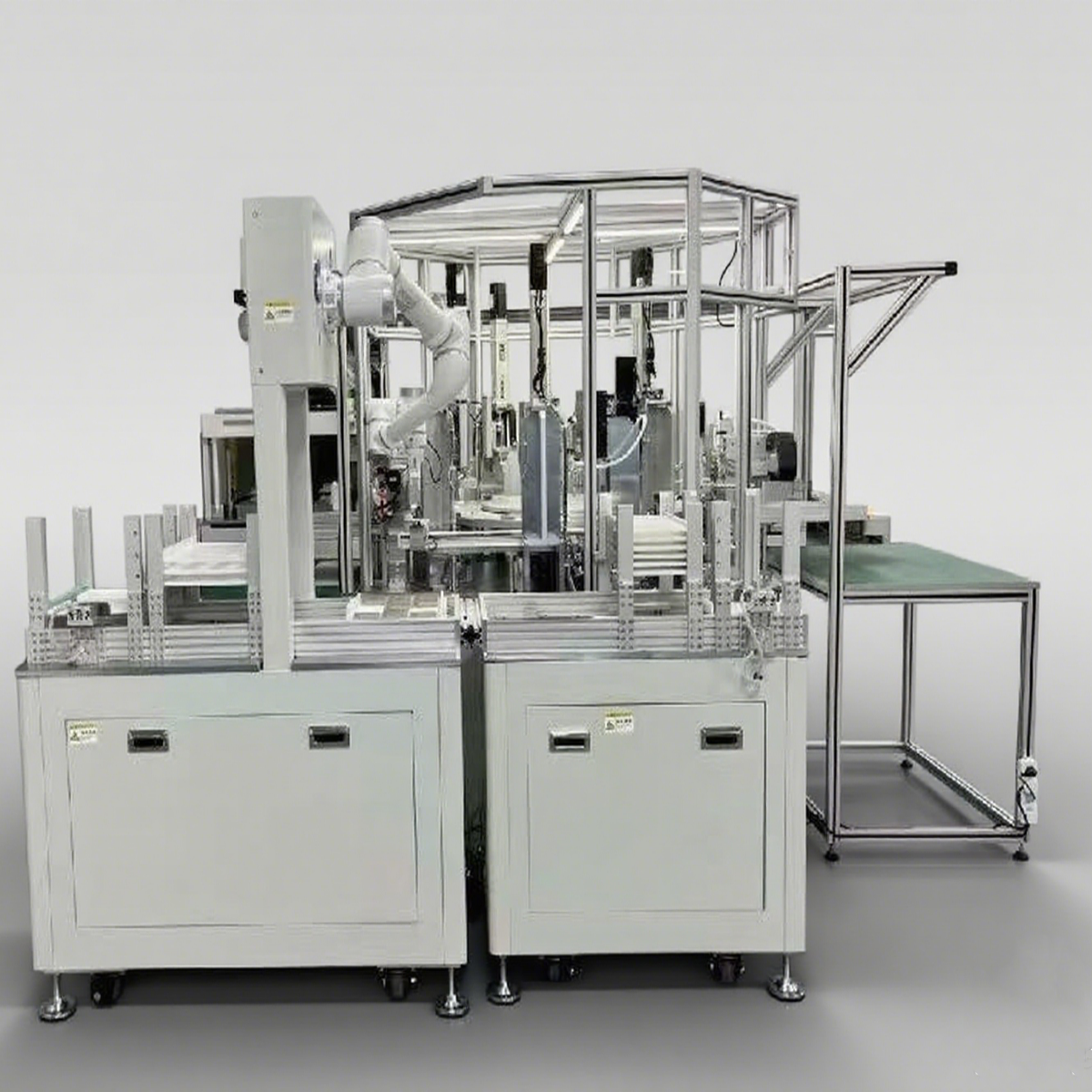
The solution is automated visual inspection — and the Atmosphere Light Full Automatic Inspection Line with PLC + Touch Screen + CCD Control from LEO represents a capable, high-throughput entry point into automated quality control for mid-to-large scale production operations.
What Is an Automated Visual Inspection Line?
An automated visual inspection line is a production-integrated system that uses cameras, lighting, and software to automatically detect defects, dimensional deviations, and quality issues in manufactured products — without human visual assessment.
The core components of a modern automated inspection line:
- Conveying system — moves products through the inspection zone at controlled speed
- Lighting system — illuminates the product to maximize defect visibility for the camera
- Vision system (CCD camera) — captures high-resolution images of each product
- Image processing software — analyzes images against defined quality parameters
- Rejection mechanism — automatically diverts non-conforming products from the line
- Control system (PLC + HMI) — manages the entire line, stores recipes, and logs results
- Data output — records inspection results for quality reporting and traceability
The result is a system that inspects every single product — not a statistical sample — at production speed, with consistent, objective criteria applied to every piece.
The Atmosphere Light System: Why Lighting Is Critical
The atmosphere light component of this inspection line is not a minor detail — it is one of the most important factors determining inspection accuracy.
Why Lighting Defines Inspection Performance
CCD cameras capture what light reveals. A defect that is invisible under flat, uniform lighting may be clearly visible under angled, structured, or colored lighting. The atmosphere light system is engineered to:
- Maximize contrast between the product surface and defects
- Eliminate reflections and glare that would obscure surface features
- Provide consistent, stable illumination across every inspection cycle
- Adapt to different product types through configurable lighting parameters
Types of Lighting Used in Automated Inspection
Coaxial lighting: Light directed along the same axis as the camera lens. Ideal for detecting surface scratches, cracks, and contamination on flat, reflective surfaces.
Ring lighting: Circular light source surrounding the camera lens. Provides even, shadow-free illumination for general surface inspection.
Dome lighting: Diffuse illumination from all angles simultaneously. Eliminates specular reflections on curved or irregular surfaces.
Dark field lighting: Low-angle illumination that makes surface texture and micro-defects visible through shadow contrast.
Structured light: Projected patterns (lines, grids) that reveal surface topology and dimensional deviations.
Colored lighting: Specific wavelengths that enhance contrast for particular defect types or product colors.
The atmosphere light system in this inspection line is configured to optimize defect detection for the specific product type — a critical advantage over generic lighting setups.
CCD Vision Technology: The Eyes of the System
What Is CCD?
CCD stands for Charge-Coupled Device — a type of image sensor that converts light into electrical signals to produce a digital image. CCD sensors are the established standard for industrial machine vision applications due to their:
- High sensitivity — captures fine detail even at high line speeds
- Low noise — produces clean images with minimal signal interference
- Consistent response — uniform pixel sensitivity across the sensor area
- High dynamic range — captures detail in both bright and dark areas simultaneously
CCD vs. CMOS in Industrial Vision
Both CCD and CMOS sensors are used in industrial vision systems. CCD sensors are preferred for applications requiring the highest image quality and consistency — particularly where defect detection accuracy is critical and false rejection rates must be minimized.
What the CCD System Detects
Depending on configuration and software parameters, the CCD inspection system can detect:
- Surface defects: scratches, cracks, chips, pits, contamination, discoloration
- Dimensional deviations: incorrect size, shape, or geometry
- Assembly errors: missing components, incorrect orientation, wrong color
- Label and print defects: missing labels, incorrect text, barcode errors
- Packaging defects: seal integrity, fill level, cap presence
The system is trained on acceptable product images and programmed with tolerance parameters — any product falling outside these parameters is automatically rejected.
PLC + Touch Screen Control: The Intelligence Layer
PLC Control
The Programmable Logic Controller (PLC) is the industrial computer that manages all mechanical and electrical functions of the inspection line:
- Controls conveyor speed and timing
- Triggers camera capture at precise intervals
- Activates the rejection mechanism for non-conforming products
- Manages safety interlocks and emergency stops
- Logs production data and inspection results
PLCs are the standard control technology for industrial automation — robust, reliable, and designed for continuous 24/7 operation in manufacturing environments.
Touch Screen HMI
The Human Machine Interface (HMI) touch screen provides the operator interface for the inspection line:
- Recipe management — store and recall inspection parameters for different products
- Real-time monitoring — live display of inspection results, throughput, and rejection rate
- Parameter adjustment — modify inspection sensitivity, conveyor speed, and lighting settings
- Alarm management — display and acknowledge system faults and warnings
- Production reporting — view and export inspection data for quality records
The touch screen HMI makes the system accessible to operators without specialized programming knowledge — parameters are set through graphical menus rather than code.
Performance: 6S/pc Speed and 24h Stable Output
6 Seconds Per Piece
At 6 seconds per piece, this inspection line processes 600 pieces per hour — or 14,400 pieces per 24-hour shift. For comparison:
| Method | Throughput | Accuracy | Labor Required |
|---|---|---|---|
| Manual inspection | 400–600 pcs/hr | 80–95% | 1–3 operators |
| This automated line | 600 pcs/hr | 99%+ | 1 monitor operator |
The automated line matches or exceeds manual throughput while delivering significantly higher accuracy and requiring only one operator for monitoring rather than active inspection.
24-Hour Stable Output
The 24h stable output specification is critical for manufacturers running continuous production. Unlike human inspectors who require breaks, shift changes, and whose performance degrades with fatigue, this system maintains consistent inspection parameters and throughput across the full 24-hour production cycle.
Key design features enabling 24h stability:
- Industrial-grade components rated for continuous duty operation
- Thermal management preventing performance drift as the system warms up
- Consistent lighting — LED atmosphere lights maintain stable output over thousands of hours
- PLC reliability — industrial PLCs are designed for years of continuous operation without restart
Applications: Where This Inspection Line Is Used
Electronics and PCB Manufacturing
Printed circuit boards and electronic components require inspection for:
- Solder joint quality and completeness
- Component presence and orientation
- PCB surface defects and contamination
- Connector pin integrity
Automated CCD inspection replaces manual AOI (Automated Optical Inspection) setups with a fully integrated line solution.
Pharmaceutical Manufacturing
Pharmaceutical products require 100% inspection for:
- Tablet and capsule integrity (chips, cracks, discoloration)
- Blister pack seal quality and fill completeness
- Label presence, legibility, and correct placement
- Bottle fill level and cap integrity
Regulatory requirements in pharmaceutical manufacturing make automated 100% inspection not just preferable but often mandatory.
Cosmetics and Personal Care
Cosmetic products require inspection for:
- Container integrity and surface defects
- Fill level accuracy
- Label placement and print quality
- Cap and closure integrity
- Color consistency
Food and Beverage Packaging
Food packaging inspection covers:
- Seal integrity and completeness
- Fill level verification
- Label presence and correct placement
- Date code legibility
- Foreign object detection (in combination with other systems)
Automotive Parts
Automotive component inspection includes:
- Surface finish quality (scratches, dents, corrosion)
- Dimensional conformance
- Marking and identification verification
- Assembly completeness
Consumer Goods and Hardware
General consumer goods inspection for:
- Surface defects and cosmetic quality
- Dimensional accuracy
- Marking and labeling verification
- Packaging integrity
ROI Analysis: The Business Case
Investment: $65,000
Labor Cost Comparison
Manual inspection (equivalent throughput — 600 pcs/hr):
- Inspectors required: 1–2 per shift, 3 shifts = 3–6 inspectors
- Labor cost (manufacturing average): $8–$20/hour per inspector
- Annual labor cost: $70,000–$350,000
Automated inspection line:
- Capital cost: $65,000
- Annual operating cost (maintenance, power): $3,000–$8,000
- Labor: 1 monitor operator (existing staff)
- Annual saving vs. manual: $60,000–$340,000
Payback period: 3–12 months depending on labor costs and shift pattern.
Quality Cost Reduction
Beyond labor savings, automated inspection reduces quality costs:
- Reduced customer returns — defects caught before shipment
- Lower warranty claims — consistent 99%+ detection rate
- Reduced rework costs — early detection prevents defective products progressing through further processing
- Regulatory compliance — documented 100% inspection records for regulated industries
Competitive Advantage
Manufacturers with automated inspection can credibly offer:
- 100% inspection certification on shipments
- Full traceability and inspection records
- Consistent quality across all production shifts
- Faster response to quality issues through real-time data
Sourcing and Implementation Considerations
Supplier Evaluation
When sourcing an automated inspection line, evaluate:
- Application-specific configuration — confirm the system is configured for your product type, defect types, and production speed
- Software capability — recipe management, reporting, and integration with your MES/ERP
- Lighting configuration — confirm the atmosphere light system is optimized for your product
- After-sales support — remote diagnostics, spare parts availability, and on-site service capability
- Validation support — for regulated industries (pharmaceutical, food), confirm the supplier can support IQ/OQ/PQ validation
Installation Requirements
- Floor space: Confirm line dimensions and layout requirements
- Power supply: 3-phase industrial power (confirm voltage and frequency for your facility)
- Compressed air: Required for rejection mechanism (confirm pressure and flow requirements)
- Network connection: For data logging and remote monitoring
- Environmental conditions: Temperature and humidity range for reliable operation
Integration with Existing Lines
The inspection line integrates into existing production lines via:
- Upstream conveyor connection (infeed)
- Downstream conveyor connection (outfeed for conforming products)
- Rejection chute or bin for non-conforming products
- Data output to MES, ERP, or quality management system
Featured Product: Atmosphere Light Full Automatic Inspection Line — LEO
MEGA BDM has sourced and verified the Atmosphere Light Full Automatic Inspection Line with PLC + Touch Screen + CCD Control — 6S/pc processing speed, 24-hour stable output, LEO brand — from a verified global manufacturer with proven automated inspection line design and manufacturing credentials.
👉 View the Full Automatic Inspection Line on MEGA BDM
Frequently Asked Questions
What products can this inspection line inspect?
The system is configurable for a wide range of products including electronics, pharmaceuticals, cosmetics, food packaging, automotive parts, and consumer goods. Confirm your specific product type, defect types, and production speed with the supplier to ensure correct configuration.
What is the minimum and maximum product size the line can handle?
Confirm the product size range (length × width × height) and weight with the supplier for your specific application. The conveying and vision system must be matched to your product dimensions.
Can the system be integrated with our existing production line?
Yes — the inspection line connects to existing upstream and downstream conveyors via standard conveyor interfaces. Confirm conveyor height, width, and speed compatibility with the supplier.
What happens to rejected products?
Non-conforming products are automatically diverted to a rejection chute or bin by the rejection mechanism. The system logs each rejection with the associated image and defect classification for quality records.
What training is required for operators?
The touch screen HMI is designed for ease of use — operators can be trained to run existing recipes and monitor the system in a few hours. Recipe creation and parameter adjustment requires more in-depth training, typically provided by the supplier during commissioning.
What is the warranty and after-sales support?
Confirm warranty terms (typically 12 months) and after-sales support capability — including remote diagnostics, spare parts availability, and on-site service — with the supplier before ordering.
Conclusion
The Atmosphere Light Full Automatic Inspection Line with PLC + Touch Screen + CCD Control addresses one of manufacturing’s most persistent quality challenges: the inability of manual visual inspection to deliver consistent, high-speed, 100% coverage across continuous production operations.
At 6 seconds per piece and 24-hour stable output, this system delivers the throughput and consistency that modern manufacturing demands — with CCD vision accuracy, PLC reliability, and an intuitive touch screen interface that makes automated inspection accessible to operations of all sizes.
For manufacturers in electronics, pharmaceuticals, cosmetics, food packaging, automotive, and consumer goods, this inspection line is the foundation of a credible, documented quality control system.
👉 View the Full Automatic Inspection Line on MEGA BDM