Introduction: The Material Revolution Happening in Plain Sight
Steel rusts. Aluminum corrodes in marine environments. Wood rots. Concrete cracks. These are not opinions — they are engineering facts that cost industries billions of dollars every year in maintenance, replacement, and failure costs.
For decades, engineers have known about a better material for many structural applications: fiber reinforced plastic (FRP), also called glass reinforced plastic (GRP) or fiberglass composite. FRP profiles are stronger than steel by weight, completely corrosion-resistant, electrically non-conductive, thermally non-conductive, and maintenance-free for decades. They don’t rust, rot, corrode, or conduct electricity.
The challenge has always been manufacturing cost. Traditional composite manufacturing methods — hand layup, resin transfer molding, filament winding — are labor-intensive and slow. They cannot produce the continuous structural profiles (beams, channels, angles, tubes, rods) that construction and infrastructure applications demand at competitive cost.
Pultrusion solves this problem. It is the only composite manufacturing process that produces continuous structural profiles at high speed, with consistent quality, and at a cost that competes directly with steel and aluminum in many applications.
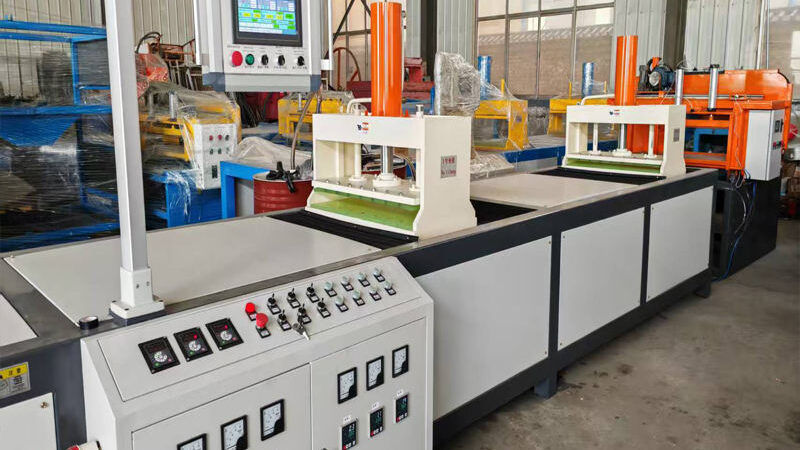
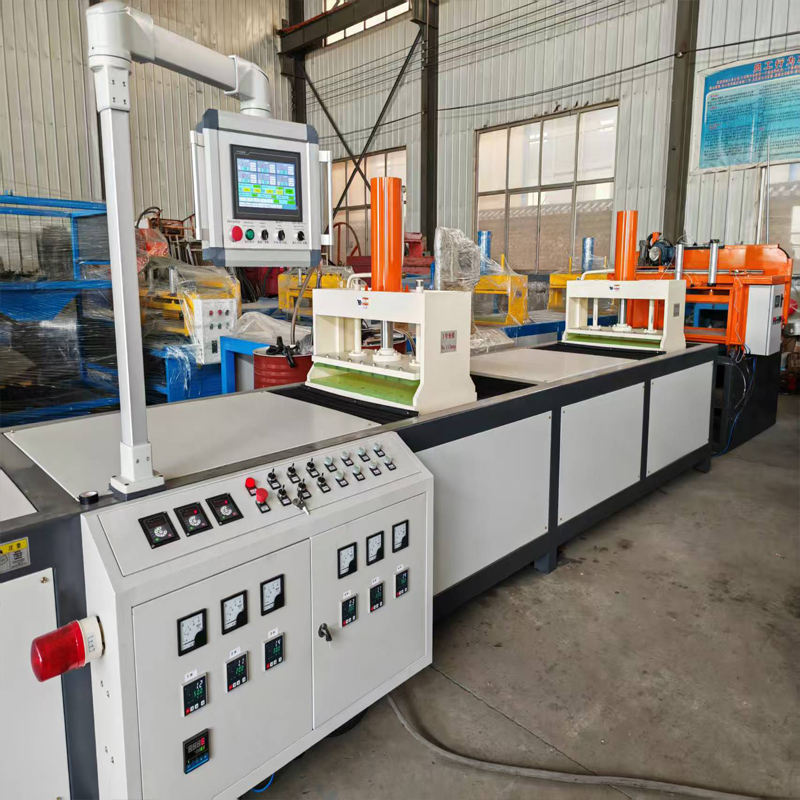
The DELI 30T Glass Fiber Pultrusion Molding Machine — with 30 tonnes of pulling force, high automation, and integrated welding line capability — is a complete production platform for FRP profile manufacturing, available at $20,000 through MEGA BDM’s global sourcing network.
What Is Pultrusion? The Process That Makes FRP Competitive
Pultrusion is a continuous manufacturing process for producing fiber reinforced plastic profiles of constant cross-section. The name combines “pull” and “extrusion” — unlike plastic extrusion where material is pushed through a die, in pultrusion the composite is pulled through.
The Pultrusion Process Step by Step
Step 1: Fiber Reinforcement Feeding Glass fiber reinforcements — rovings (bundles of continuous filaments), mats, and woven fabrics — are fed from creels (fiber racks) into the process. The fiber architecture determines the mechanical properties of the finished profile.
Step 2: Resin Impregnation The dry fiber reinforcements pass through a resin bath containing the thermosetting resin system (typically polyester, vinyl ester, or epoxy) plus hardener, fillers, UV stabilizers, and other additives. The fibers are thoroughly wetted and impregnated with resin.
Step 3: Preforming Impregnated fibers pass through a series of preforming guides that organize and shape the fiber bundle into the approximate cross-section of the finished profile before entering the die.
Step 4: Die Curing The impregnated fiber bundle enters the heated steel die — the heart of the pultrusion machine. The die is precisely machined to the exact cross-section of the finished profile and heated to 120–180°C. As the composite passes through the die, the resin undergoes exothermic curing (polymerization), transforming from liquid to solid.
Step 5: Pulling The cured profile exits the die and is gripped by the pulling system — in the DELI 30T machine, a hydraulic or mechanical pulling system with 30 tonnes of force. The pulling system draws the entire fiber/resin assembly through the die at a controlled, constant speed (typically 0.3–2.0 meters per minute depending on profile size and resin system).
Step 6: Cutting A flying cutoff saw cuts the continuous profile to the required length without stopping the production line.
Why Pultrusion Is the Most Efficient FRP Process
| Process | Continuous? | Labor Intensity | Production Speed | Profile Consistency |
|---|---|---|---|---|
| Pultrusion | Yes | Low | High | Excellent |
| Hand layup | No | Very High | Very Low | Variable |
| RTM | No | Medium | Low | Good |
| Filament winding | Partial | Medium | Medium | Good |
| Compression molding | No | Medium | Medium | Good |
Pultrusion is the only FRP process that is truly continuous, highly automated, and capable of producing structural profiles at speeds and costs that compete with metal extrusion.
The DELI 30T Machine: Capability & Configuration
30-Tonne Pulling Force — What It Enables
The pulling force specification is the primary determinant of what profiles a pultrusion machine can produce. Higher pulling force enables:
Larger cross-sections
- More fiber reinforcement = more pulling resistance
- 30T enables large structural profiles: I-beams, wide-flange sections, heavy-wall tubes
Thicker walls
- Thicker profiles require more force to pull through the die
- 30T handles wall thicknesses up to 15–25mm depending on profile geometry
Multiple profiles simultaneously
- Some configurations run multiple smaller profiles through separate dies simultaneously
- 30T provides sufficient force for multi-die production
Higher fiber volume fraction
- Higher fiber content = stronger profile but more pulling resistance
- 30T enables fiber volume fractions of 50–65% for high-performance structural profiles
Comparison of pulling force vs. capability:
| Pulling Force | Typical Profile Size | Applications |
|---|---|---|
| 5–10T | Small rods, thin tubes, small angles | Electrical insulation, small structural |
| 15–20T | Medium profiles, standard structural | General construction, gratings |
| 30T | Large structural profiles, heavy sections | Infrastructure, heavy construction, marine |
| 50T+ | Very large profiles, special sections | Bridge decking, large structural beams |
High Automation System
The DELI 30T’s high automation level is a critical production advantage:
Automated resin bath control
- Resin level sensors maintain consistent bath level
- Temperature control of resin bath for optimal viscosity
- Resin mixing and metering systems for consistent formulation
Tension control system
- Automatic fiber tension monitoring and adjustment
- Prevents fiber breakage and ensures consistent fiber distribution
- Critical for maintaining mechanical property consistency
Temperature control
- Multi-zone die temperature control (typically 3–5 zones)
- PID temperature controllers for precise, stable cure temperature
- Temperature profiling for different resin systems and profile sizes
Pulling speed control
- Variable speed pulling system with precise speed control
- Consistent pulling speed is critical for consistent cure and profile dimensions
- Speed adjustment for different profile sizes and resin systems
Cutoff system
- Automatic flying cutoff saw
- Programmable cut length
- Clean, square cuts without stopping the production line
Welding Line Integration
The integrated welding line capability extends the machine’s production scope beyond basic pultrusion:
Profile joining
- Joining pultruded profiles end-to-end for longer lengths than the production line allows
- Creating assemblies from multiple pultruded components
Structural assembly
- Welding (bonding) of FRP profiles into structural frames, trusses, and assemblies
- Applicable to both thermoplastic and thermoset composite joining methods
Note: FRP “welding” typically refers to adhesive bonding or thermoplastic welding (for thermoplastic composites) rather than fusion welding used for metals. Confirm the specific joining technology with the supplier for your application.
FRP Profile Products: What the Machine Produces
Structural Profiles
The primary output of pultrusion machines — structural shapes that replace steel and aluminum in corrosion-resistant applications:
Solid rods
- Diameter range: 6mm to 50mm+
- Applications: Rebar replacement in concrete, tent poles, fishing rods, electrical insulation rods, reinforcement elements
Hollow tubes
- Round, square, and rectangular cross-sections
- Wall thickness: 2mm to 20mm+
- Applications: Structural framing, handrail systems, ladder rails, electrical conduit, antenna masts
Angles
- Equal and unequal leg angles
- Applications: Structural framing, cable tray supports, grating frames, equipment supports
Channels (C-sections)
- Standard and custom channel profiles
- Applications: Structural beams, cable management, equipment frames, walkway supports
I-beams and H-sections
- Wide-flange and standard I-beam profiles
- Applications: Structural beams, bridge decking supports, platform framing
Flat sheets and planks
- Solid and hollow flat profiles
- Applications: Grating planks, walkway decking, wall cladding, formwork
Gratings and Walkway Systems
Pultruded FRP gratings are one of the highest-value products from pultrusion machines:
- Pultruded grating — individual pultruded bars assembled into grating panels
- Molded grating — produced by compression molding (different process)
- Applications: Industrial walkways, offshore platforms, chemical plant flooring, water treatment facilities, food processing plants
FRP grating commands premium pricing vs. steel grating due to its corrosion resistance, light weight, and zero maintenance requirements.
Electrical Insulation Components
FRP’s electrical non-conductivity makes it ideal for:
- Electrical insulation rods and tubes
- Transformer components
- High-voltage switchgear insulation
- Utility pole cross-arms
- Cable tray systems in electrical installations
Specialty Profiles
Custom profiles for specific applications:
- Window and door profiles (replacing PVC and aluminum)
- Ladder rails and rungs
- Tent and marquee poles
- Greenhouse structural profiles
- Solar panel mounting frames
FRP vs. Steel vs. Aluminum: The Material Comparison
Understanding why customers choose FRP over traditional materials is essential for marketing pultruded profiles:
| Property | FRP/GRP | Steel | Aluminum |
|---|---|---|---|
| Density (g/cm³) | 1.8–2.0 | 7.85 | 2.70 |
| Tensile strength (MPa) | 200–700 | 250–500 | 150–300 |
| Strength-to-weight ratio | Excellent | Good | Good |
| Corrosion resistance | Excellent | Poor (rusts) | Good (oxidizes) |
| Electrical conductivity | Non-conductive | Conductive | Conductive |
| Thermal conductivity | Low | High | High |
| Maintenance | None | High (painting) | Low |
| Magnetic properties | Non-magnetic | Magnetic | Non-magnetic |
| Cost (material) | Medium-High | Low-Medium | Medium |
| Cost (lifecycle) | Low | High | Medium |
The FRP value proposition is lifecycle cost, not purchase price. A steel walkway grating in a chemical plant may cost less upfront but requires painting every 2–3 years, replacement every 10–15 years, and generates ongoing maintenance costs. An FRP grating costs more upfront but requires zero maintenance and lasts 30+ years.
Key Markets for FRP Profiles
Oil & Gas & Petrochemical
The highest-value market for FRP profiles. Offshore platforms, refineries, and chemical plants operate in extremely corrosive environments where steel maintenance costs are enormous.
Applications:
- Offshore platform walkways, gratings, and handrails
- Refinery pipe supports and cable trays
- Chemical plant structural framing
- Cooling tower structural components
- Tank farm walkways and access platforms
Value driver: Corrosion resistance eliminates painting and replacement costs. Non-sparking, non-conductive properties improve safety in hazardous areas.
Water & Wastewater Treatment
Water treatment plants are highly corrosive environments — chlorine, hydrogen sulfide, and biological activity attack steel rapidly.
Applications:
- Walkways and platforms over treatment tanks
- Handrail systems
- Equipment supports
- Pipe supports and cable trays
- Screening and filtration equipment components
Marine & Coastal Infrastructure
Seawater is one of the most corrosive environments on earth. FRP’s complete resistance to seawater corrosion makes it ideal for:
- Jetty and pier decking
- Marina walkways and finger piers
- Seawall and revetment components
- Boat building structural components
- Aquaculture cage structures
Construction & Infrastructure
Growing adoption of FRP in mainstream construction:
- Bridge decking (FRP deck panels replacing concrete)
- Pedestrian bridge structures
- Utility pole cross-arms
- Reinforcing bar (rebar) in concrete structures
- Facade and cladding systems
Electrical & Utilities
- Utility pole cross-arms (replacing wood)
- Electrical substation structural components
- Cable management systems
- Transformer insulation components
- High-voltage equipment supports
Wind Energy
- Wind turbine blade structural components
- Nacelle structural elements
- Tower internal platforms and ladders
Production Economics: The Business Case for a Pultrusion Line
Investment: $20,000 (DELI 30T Machine)
Revenue Potential
Example: FRP structural angle production
- Profile: 50×50×5mm equal angle
- Production speed: 0.8 m/min
- Production hours: 16 hours/day, 300 days/year
- Annual production: 0.8 × 60 × 16 × 300 = 230,400 meters/year
- Selling price: $8–15/meter (market dependent)
- Annual revenue: $1,843,200–$3,456,000
Example: FRP grating plank production
- Profile: 38×38mm square tube (grating plank)
- Production speed: 0.5 m/min
- Annual production: 144,000 meters/year
- Selling price: $12–20/meter
- Annual revenue: $1,728,000–$2,880,000
Operating Costs
- Raw materials (glass fiber + resin): typically 40–55% of revenue
- Labor: 2–3 operators per shift
- Energy: 30–50 kW typical power consumption
- Die amortization: dies cost $3,000–$15,000 each, last 500,000–2,000,000 meters
Payback Period
At $20,000 capital cost and typical FRP profile margins, the machine pays for itself within 1–3 months of production — one of the fastest payback periods of any manufacturing equipment investment.
Die Design: The Key to Profile Quality
The pultrusion die is the most critical component determining profile quality and dimensional accuracy. Key considerations:
Die material: Hardened tool steel (H13 or equivalent) for long die life Die length: Typically 600–1,200mm — longer dies provide better cure and surface finish Die surface finish: Polished chrome plating for easy release and surface quality Die heating: Electric cartridge heaters with multiple temperature zones Die design: Must account for resin shrinkage, fiber spring-back, and thermal expansion
Die cost: $3,000–$15,000 per profile depending on complexity and size. Dies are profile-specific — each new profile requires a new die. Die cost is the primary barrier to producing many different profiles.
Die lead time: 4–8 weeks for new die manufacture.
Featured Product: DELI 30T Pultrusion Machine on MEGA BDM
MEGA BDM has sourced and verified the DELI 30T Glass Fiber Pultrusion Molding Equipment FRP Profile Machinery Welding Line — a complete, high-automation FRP profile production system from DELI, a verified specialist FRP machinery manufacturer with proven international export experience.
👉 View the DELI 30T Pultrusion Machine on MEGA BDM
Frequently Asked Questions
What resin systems can the machine process?
Pultrusion machines process thermosetting resins — primarily unsaturated polyester (most common, lowest cost), vinyl ester (better chemical resistance), and epoxy (highest performance). Confirm the resin system compatibility with the supplier for your specific application requirements.
What fiber reinforcements can be used?
Standard pultrusion uses E-glass rovings and mats. The machine can also process S-glass (higher strength), carbon fiber (highest strength/stiffness, highest cost), and aramid fiber (Kevlar) for specialized applications. Confirm fiber compatibility with the supplier.
How many operators does the machine require?
A 30T pultrusion line typically requires 2–3 operators per shift: one to monitor the process and resin bath, one to manage fiber feeding and creel changes, and one for cutoff and finished product handling.
What is the typical production speed?
Production speed depends on profile size, wall thickness, and resin system. Typical speeds range from 0.3 m/min (large, thick profiles) to 2.0 m/min (small rods and thin profiles). Confirm the expected speed for your specific profile with the supplier.
How long does it take to change from one profile to another?
Profile changeover requires changing the die, preforming guides, and fiber creel setup. A typical changeover takes 4–8 hours. Operations producing many different profiles typically dedicate machines to specific profile families to minimize changeover time.
What is the minimum order for dies?
Dies are typically ordered individually for each profile. There is no minimum order — you can start with a single die for your primary profile and add dies as your product range expands.
Conclusion
The DELI 30T Glass Fiber Pultrusion Machine is a complete production platform for one of the fastest-growing segments of the global composites industry. FRP profiles are displacing steel, aluminum, and wood in corrosion-resistant, electrically non-conductive, and lightweight structural applications across oil & gas, water treatment, marine, construction, and electrical markets worldwide.
At $20,000, with 30 tonnes of pulling force, high automation, and integrated welding line capability, this machine delivers industrial-scale FRP profile production capability at a capital cost that makes entry into the composites manufacturing business accessible to entrepreneurs and established manufacturers alike — with payback periods measured in months, not years.
👉 View the full product details on MEGA BDM