
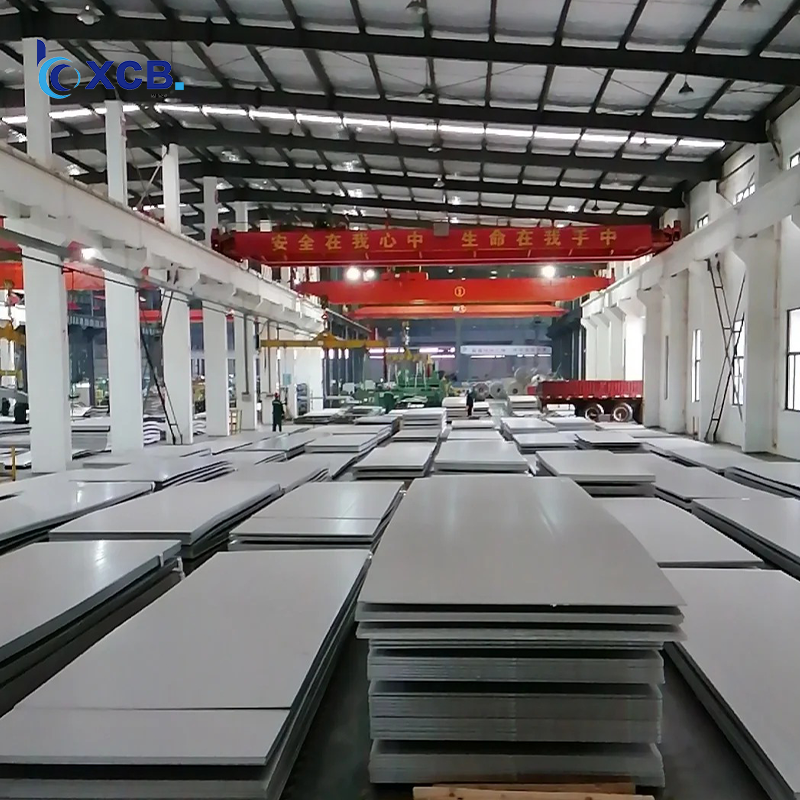
Introduction: Why Stainless Steel Remains the Material of Choice
In construction, industrial fabrication, marine engineering, and architectural design, few materials have proven as enduringly valuable as stainless steel. Corrosion-resistant, structurally strong, hygienic, and visually striking, stainless steel plate and sheet is specified across thousands of applications worldwide — from skyscraper facades and hospital operating theaters to chemical processing plants and offshore oil platforms.
Among the dozens of stainless steel grades available, AISI 304 and AISI 904L represent two of the most important — one the global workhorse grade, the other a premium high-performance alloy for the most demanding environments. Understanding the difference, and knowing which grade your application requires, is the foundation of a smart purchasing decision.
This guide covers everything procurement managers, fabricators, contractors, architects, and importers need to know.
Price Range
| Grade & Form | Price Range (FOB China) |
|---|---|
| 304 sheet (2B, 1–3mm) | $1,800 – $2,800 USD/tonne |
| 304 plate (6–20mm) | $2,000 – $3,200 USD/tonne |
| 904L sheet (1–3mm) | $6,000 – $9,000 USD/tonne |
| 904L plate (6–20mm) | $7,000 – $12,000 USD/tonne |
What Is Stainless Steel? The Basics
Stainless steel is an iron-based alloy containing a minimum of 10.5% chromium by mass. The chromium reacts with oxygen to form a thin, invisible chromium oxide passive layer on the surface — the self-repairing protective film that gives stainless steel its corrosion resistance.
Additional alloying elements — nickel, molybdenum, manganese, nitrogen, copper — are added in varying proportions to enhance specific properties: corrosion resistance, strength, formability, weldability, and high-temperature performance.
Stainless steels are classified into families based on their microstructure:
- Austenitic — the largest family; includes 304 and 904L; non-magnetic, excellent corrosion resistance, highly formable
- Ferritic — magnetic, lower nickel content, moderate corrosion resistance
- Duplex — combines austenitic and ferritic properties; high strength and corrosion resistance
- Martensitic — hardened by heat treatment; used for cutlery and tools
- Precipitation hardening — ultra-high strength for aerospace applications
Both AISI 304 and AISI 904L are austenitic grades — the most widely used family in construction and industrial applications.
AISI 304 Stainless Steel: The Global Standard
Composition
| Element | Content |
|---|---|
| Chromium (Cr) | 18–20% |
| Nickel (Ni) | 8–10.5% |
| Carbon (C) | ≤0.08% |
| Manganese (Mn) | ≤2% |
| Silicon (Si) | ≤1% |
| Iron (Fe) | Balance |
Why 304 Is the World’s Most Used Stainless Steel
AISI 304 — also known as 18/8 stainless steel (18% chromium, 8% nickel) — accounts for approximately 50% of global stainless steel production. Its dominance comes from an exceptional combination of properties at a competitive price point:
- Excellent corrosion resistance in most atmospheric, freshwater, and mild chemical environments
- Outstanding formability — can be deep drawn, bent, rolled, and fabricated with standard tooling
- Good weldability — all standard welding processes applicable
- Hygienic surface — non-porous, easy to clean, suitable for food and pharmaceutical contact
- Attractive appearance — takes a wide range of surface finishes from matte to mirror polish
- Non-magnetic in annealed condition
- Good cryogenic properties — maintains toughness at very low temperatures
Where 304 Is Used
- Architecture & construction: Facades, roofing, wall cladding, handrails, structural supports, elevator interiors
- Food & beverage: Processing equipment, storage tanks, conveyors, kitchen equipment
- Pharmaceutical: Vessels, pipework, clean room equipment
- Automotive: Exhaust systems, trim, structural components
- Domestic: Sinks, appliances, cookware, cutlery
- Chemical processing: Mild chemical storage and handling
- Marine (limited): Above-waterline applications in low-chloride environments
Limitations of 304
AISI 304 is not suitable for:
- High-chloride environments (coastal, marine, swimming pools) — risk of pitting and crevice corrosion
- Strong reducing acids (hydrochloric, sulfuric at high concentrations)
- Applications requiring resistance to stress corrosion cracking in chloride-rich environments
For these demanding conditions, 904L is the answer.
AISI 904L Stainless Steel: The Premium High-Performance Grade
Composition
| Element | Content |
|---|---|
| Chromium (Cr) | 19–23% |
| Nickel (Ni) | 23–28% |
| Molybdenum (Mo) | 4–5% |
| Copper (Cu) | 1–2% |
| Carbon (C) | ≤0.02% |
| Iron (Fe) | Balance |
What Makes 904L Exceptional
AISI 904L is a super austenitic stainless steel — a premium grade engineered for the most aggressive corrosive environments. Its dramatically higher nickel (23–28%) and molybdenum (4–5%) content, combined with copper additions, deliver performance that standard grades simply cannot match:
- Outstanding resistance to pitting and crevice corrosion — the high molybdenum content provides a PREN (Pitting Resistance Equivalent Number) of >32, compared to ~18 for 304
- Excellent resistance to chloride stress corrosion cracking — critical for marine and offshore applications
- Superior resistance to sulfuric acid — across a wide range of concentrations and temperatures
- Resistance to phosphoric acid and acetic acid — important for chemical processing
- Very low carbon content (≤0.02%) — minimizes sensitization risk during welding
- Good formability and weldability — despite its high alloy content
Where 904L Is Specified
- Oil & gas: Offshore platforms, subsea equipment, process pipework, heat exchangers
- Marine: Shipbuilding, seawater handling systems, desalination plants
- Chemical processing: Sulfuric acid production and handling, phosphoric acid plants, bleaching equipment
- Pulp & paper: Bleach plant equipment, digesters, washing systems
- Pharmaceutical: High-purity process equipment
- Desalination: Evaporators, heat exchangers, brine handling
- Luxury goods: Rolex uses 904L for watch cases and bracelets — a testament to its surface finish quality and corrosion resistance
904L vs 304: When to Upgrade
| Condition | 304 | 904L |
|---|---|---|
| Atmospheric exposure (inland) | ✔ Suitable | Overkill |
| Coastal / marine atmosphere | ⚠ Marginal | ✔ Recommended |
| Seawater immersion | ✗ Not suitable | ✔ Suitable |
| Sulfuric acid (dilute) | ⚠ Limited | ✔ Excellent |
| Chloride stress corrosion | ⚠ Risk | ✔ Resistant |
| Food processing | ✔ Suitable | ✔ Suitable |
| High-purity pharmaceutical | ✔ Suitable | ✔ Superior |
| Budget-sensitive projects | ✔ Cost-effective | Higher cost |
Plate vs. Sheet: Understanding the Product Forms
Stainless Steel Sheet
- Thickness: Typically 0.3mm – 6mm
- Width: Standard widths 1,000mm, 1,219mm (48″), 1,500mm, 2,000mm
- Length: Standard lengths 2,000mm, 2,438mm (96″), 3,000mm, 6,000mm
- Applications: Cladding, roofing, fabricated components, kitchen equipment, decorative panels
Stainless Steel Plate
- Thickness: Typically 6mm and above (up to 100mm+)
- Width: Standard widths 1,500mm, 2,000mm, 2,500mm
- Length: Standard lengths 3,000mm, 6,000mm, 12,000mm
- Applications: Structural components, pressure vessels, tanks, heavy fabrication, marine structures
Surface Finish Options
Surface finish dramatically affects both aesthetics and corrosion performance:
| Finish | Description | Typical Application |
|---|---|---|
| No. 1 (Hot rolled, annealed) | Rough, dull surface | Industrial, non-visible applications |
| No. 2B | Smooth, matte, reflective | General purpose, most common |
| No. 2D | Dull, non-reflective | Deep drawing applications |
| No. 4 (Brushed) | Unidirectional satin finish | Architectural, kitchen equipment |
| No. 6 (Tampon) | Dull satin, softer than No. 4 | Decorative applications |
| No. 7 (Reflective) | High reflectivity, some haze | Architectural, decorative |
| No. 8 (Mirror) | Full mirror polish | Decorative, optical applications |
| BA (Bright Annealed) | Bright, reflective | Automotive trim, appliances |
Key Specifications to Request from Suppliers
When sourcing stainless steel plate and sheet, always request:
- Mill test certificate (MTC) — confirms chemical composition and mechanical properties per heat/batch
- Grade confirmation — AISI 304 or 904L (not just “stainless steel”)
- Standard compliance — ASTM A240, EN 10088, JIS G4304, or equivalent
- Thickness tolerance — confirm tolerance class (standard or tight tolerance)
- Surface finish — specify finish designation (2B, No. 4, BA, etc.)
- Edge condition — mill edge or cut edge
- Flatness — critical for precision fabrication applications
- Country of origin — relevant for import duties and trade compliance
Applications in Construction & Building Materials
Stainless steel plate and sheet is specified across a wide range of construction and building applications:
Structural:
- Column cladding and protection
- Structural connection plates and gussets
- Bridge components and expansion joints
- Tunnel lining and drainage channels
Architectural:
- Building facades and curtain wall systems
- Roofing and rainscreen cladding
- Entrance canopies and feature elements
- Elevator interiors and doors
- Handrails, balustrades, and guardrails
Interior:
- Wall cladding in commercial kitchens and food processing areas
- Hospital and laboratory wall and ceiling panels
- Flooring plates in industrial environments
- Decorative feature walls and ceiling panels
Infrastructure:
- Water treatment plant equipment
- Wastewater handling systems
- Coastal and marine infrastructure
- Chemical storage and handling facilities
Sourcing from Global Suppliers
China is the world’s largest producer of stainless steel, accounting for over 55% of global output. Major production centers include Fujian (Tsingshan Group), Guangdong, Jiangsu, and Zhejiang provinces. Chinese mills produce stainless steel to international standards (ASTM, EN, JIS) and export to markets worldwide.
What to Look for in a Supplier
- Mill test certificates — non-negotiable; verify chemical composition matches the specified grade
- Third-party inspection — SGS, Bureau Veritas, or equivalent for large orders
- ISO 9001 certification — quality management system confirmation
- Grade authenticity — 904L in particular should be verified; some suppliers substitute lower grades
- Thickness and flatness tolerance — confirm against your fabrication requirements
- Packaging — proper interleaving, edge protection, and moisture protection for sea freight
- MOQ — typically 1–5 tonnes for standard grades; higher for specialty grades like 904L
- Lead time — ex-stock for standard sizes; 2–6 weeks for non-standard dimensions
Shipping Considerations
Stainless steel plate and sheet ships via sea freight (LCL or FCL). Heavy gauge plate is typically shipped on flat racks or in open-top containers. Factor in:
- Ocean freight and marine insurance
- Import duties (HS code: 7219 for flat-rolled stainless steel products)
- Anti-dumping duties — applicable in some markets (EU, US) for Chinese stainless steel; verify current rates
- Port handling and customs clearance
- Inland transport and unloading (heavy plate requires forklift or crane)
Featured Product: AISI 304 & 904L Stainless Steel Plate & Sheet
MEGA BDM has sourced and verified AISI 304 and 904L Stainless Steel Plate and Sheet — durable metal building materials for flooring, construction, and industrial applications — from trusted global manufacturers with full mill certification and international standard compliance.
Whether you need standard 304 sheet for architectural cladding or premium 904L plate for a demanding chemical or marine application, our sourcing team can help you identify the right grade, specification, and supplier for your project.
👉 View the Stainless Steel Plate & Sheet on MEGA BDM
Need mill certificates, custom dimensions, specific surface finishes, or bulk pricing for a project?
Frequently Asked Questions
How do I verify that stainless steel is genuinely 304 or 904L grade?
Always request the mill test certificate (MTC) which shows the chemical composition of the specific heat/batch. For critical applications, commission third-party chemical analysis (XRF testing) to verify grade independently.
Can 304 stainless steel be used near the ocean?
AISI 304 can be used in coastal environments for above-ground architectural applications if regularly cleaned and maintained. For direct seawater contact, immersion, or high-chloride splash zones, 316L or 904L should be specified.
What is the difference between 304 and 316L stainless steel?
316L adds 2–3% molybdenum to the 304 composition, significantly improving chloride corrosion resistance. 316L is the standard marine-grade stainless steel. 904L goes further with 4–5% molybdenum and much higher nickel content for the most aggressive environments.
Is stainless steel plate magnetic?
Austenitic grades (304, 904L) are non-magnetic in the annealed condition. Cold working (bending, forming) can induce slight magnetism in 304 but not in 904L due to its higher nickel content and greater austenite stability.
What surface finish is best for exterior architectural applications?
No. 4 brushed finish is the most common for exterior architectural use — it hides fingerprints and minor scratches well and maintains its appearance over time. 2B is suitable for less visible applications. Mirror finish (No. 8) is striking but shows fingerprints and requires more maintenance.
What are anti-dumping duties and do they apply to my import?
Several markets (EU, US, India) have imposed anti-dumping duties on Chinese stainless steel flat products. Rates and applicable product categories change periodically. Always verify current duty rates with your customs broker before placing a large order.
Conclusion
AISI 304 and 904L stainless steel plate and sheet represent two of the most important materials in modern construction, industrial fabrication, and marine engineering. Understanding the difference between these grades — and specifying the right one for your application — is the foundation of a successful project and a sound procurement decision.
MEGA BDM connects buyers with verified global manufacturers, providing mill-certified stainless steel products across a full range of grades, thicknesses, widths, and surface finishes — with dedicated sourcing support from inquiry to delivery.
👉 View the Stainless Steel Plate & Sheet on MEGA BDM and contact our sourcing team to discuss your project specifications.