Introduction: The Data Center Crisis Driving Demand for Modular Solutions
The world is in the middle of an unprecedented data center buildout. Driven by the explosive growth of artificial intelligence, high-performance computing (HPC), and cloud infrastructure, global demand for compute capacity is outpacing the ability of traditional brick-and-mortar data centers to keep up.
The bottlenecks are real: construction timelines of 18–36 months, skyrocketing land and real estate costs, power grid constraints, and the sheer thermal density of modern AI accelerators (NVIDIA H100, H200, GB200) that conventional air-cooled facilities simply cannot handle efficiently.
The solution that is rapidly becoming the industry standard for fast-moving operators: containerized, liquid-cooled, modular data centers — purpose-built, factory-tested, and deployable in weeks rather than years.
The 40ft containerized liquid-cooled data center is at the forefront of this shift. This guide covers everything technology operators, enterprise IT teams, colocation providers, and infrastructure importers need to know.
Price Range
| Configuration | Price Range (FOB China) |
|---|---|
| Basic 40ft air-cooled MDC | $150,000 – $400,000 USD |
| 40ft liquid-cooled MDC (DLC) | $400,000 – $1,200,000 USD |
| 40ft immersion-cooled MDC | $800,000 – $2,500,000 USD |
| 40ft AI/HPC optimized MDC | $1,000,000 – $5,000,000+ USD |
Prices vary enormously based on IT power capacity, cooling type, power redundancy level, included IT infrastructure, and customization requirements. Always request a detailed specification and quotation.
What Is a Containerized Data Center?
A containerized data center — also called a modular data center (MDC) or mobile data center — is a self-contained, fully functional data center infrastructure built inside a standard shipping container (typically 20ft or 40ft ISO format).
Everything required to operate a data center is pre-integrated at the factory:
- IT equipment racks — server, storage, and networking infrastructure
- Power distribution — UPS systems, PDUs, busway distribution
- Cooling system — liquid cooling, precision air conditioning, or hybrid
- Physical security — access control, CCTV, intrusion detection
- Fire suppression — clean agent or inert gas systems
- Monitoring & management — DCIM (Data Center Infrastructure Management) systems
- Structural enclosure — weatherproof, seismically rated container shell
The result is a plug-and-play data center that arrives on-site factory-tested and ready to power on — dramatically compressing deployment timelines from years to weeks.
Why Liquid Cooling? The Physics of Modern AI Computing
Traditional air cooling has reached its practical limits for high-density AI and HPC workloads. Here’s why liquid cooling is now essential:
The Density Problem
Modern AI accelerators generate extraordinary heat:
- NVIDIA H100 GPU: 700W per card, 8 cards per server = 5,600W per 1U server
- NVIDIA GB200 NVL72: Up to 120kW per rack
- Traditional air-cooled data center: Typically handles 5–15kW per rack
Air simply cannot remove heat fast enough from racks running at 30–120kW. Liquid cooling is the only viable solution.
Liquid Cooling Advantages
| Metric | Air Cooling | Liquid Cooling |
|---|---|---|
| Max rack density | 10–15 kW | 30–120+ kW |
| PUE (Power Usage Effectiveness) | 1.4–1.8 | 1.03–1.2 |
| Cooling efficiency | Moderate | 3,000x more efficient than air |
| Noise level | High (fans) | Low |
| Water usage | High (evaporative) | Low (closed loop) |
| AI/HPC suitability | Limited | Optimal |
PUE (Power Usage Effectiveness) is the key efficiency metric: PUE of 1.0 is perfect (all power goes to IT equipment). Liquid-cooled containerized data centers routinely achieve PUE of 1.03–1.15 — dramatically better than the industry average of 1.58 for traditional facilities.
Types of Liquid Cooling in Containerized Data Centers
Direct Liquid Cooling (DLC) / Cold Plate Liquid coolant flows through cold plates mounted directly on CPUs and GPUs. Most common for AI server deployments. Removes 60–80% of heat via liquid, remainder via air.
Immersion Cooling Servers are submerged in dielectric fluid (mineral oil or engineered fluid). Removes 100% of heat via liquid. Maximum efficiency but higher complexity and cost.
Rear-Door Heat Exchangers Liquid-cooled doors replace standard rack rear doors. Captures heat as it exits the rack. Simpler retrofit option for existing air-cooled infrastructure.
In-Row Liquid Cooling Liquid cooling units placed between server racks. Captures hot air before it reaches the room. Intermediate solution between full air and full liquid cooling.
The 40ft Container Format: Why Size Matters
The 40ft ISO container (12.2m × 2.4m × 2.9m) is the optimal format for serious data center deployments:
vs. 20ft container:
- 2x the floor space — more racks, more compute density
- Better power-to-space ratio for electrical infrastructure
- More room for cooling infrastructure and maintenance access
- Better economics per kW of IT capacity
Capacity of a 40ft containerized data center (typical):
- Rack count: 8–20 racks depending on configuration
- IT power capacity: 200kW – 2MW depending on power infrastructure
- Cooling capacity: Matched to IT power load
- Physical footprint: Equivalent to ~90m² of traditional data center floor space
Key Specifications to Evaluate
When comparing 40ft containerized liquid-cooled data center solutions, request and compare:
IT Infrastructure
- Number of racks and rack unit (U) capacity
- Maximum rack power density (kW per rack)
- Cable management system (top of rack vs. end of row)
- Network infrastructure included or customer-supplied
Power System
- Input voltage: 10kV, 400V, or 480V depending on market
- UPS capacity and redundancy: N, N+1, or 2N configuration
- Generator connection: Automatic transfer switch (ATS) included?
- PDU type: Intelligent PDUs with per-outlet monitoring recommended
- Power redundancy: A+B feed to each rack
Cooling System
- Cooling type: DLC, immersion, rear-door, or hybrid
- Cooling capacity (kW): Must exceed maximum IT load
- PUE rating: Target <1.2 for liquid-cooled systems
- Coolant type: Water, glycol mix, or dielectric fluid
- Chiller included or external: Some systems require external chiller plant
- Redundancy: N+1 cooling recommended for production workloads
Physical & Structural
- Container grade: ISO standard shipping container or purpose-built enclosure
- Seismic rating: Required for earthquake-prone regions
- Wind load rating: Critical for exposed or elevated deployments
- Insulation: Thermal and acoustic insulation specification
- Access doors: Number, size, and security rating
- Forklift/crane points: Lifting and positioning capability
Monitoring & Management
- DCIM system: Real-time monitoring of power, cooling, and environment
- Remote management: Out-of-band management capability
- Alerting: Temperature, humidity, power, and security alerts
- Integration: API compatibility with existing management systems
Safety & Compliance
- Fire suppression: FM200, Novec 1230, or inert gas system
- Certifications: CE, UL, ISO, local electrical codes
- IP rating: Ingress protection for outdoor deployment
- EMC compliance: Electromagnetic compatibility certification
Applications: Who Needs a Containerized Liquid-Cooled Data Center?
AI Training & Inference
The primary growth driver. AI model training requires massive GPU clusters running at extreme power densities. Containerized liquid-cooled solutions enable rapid deployment of AI compute capacity without waiting for traditional data center construction.
Typical users: AI research labs, LLM developers, AI cloud providers, enterprise AI teams
High Performance Computing (HPC)
Scientific computing, financial modeling, weather simulation, drug discovery, and engineering simulation all require HPC clusters that generate extreme heat loads.
Typical users: Universities, research institutions, national laboratories, financial institutions, engineering firms
Cloud Computing Edge Nodes
Cloud providers deploying compute capacity closer to end users — reducing latency for real-time applications, gaming, streaming, and IoT processing.
Typical users: Cloud providers (AWS, Azure, Google, regional clouds), CDN operators, telecom companies
Colocation & Data Center Operators
Rapid capacity expansion without construction. Deploy additional capacity in weeks to meet customer demand.
Typical users: Colocation providers, managed service providers, data center REITs
Enterprise Private Cloud
Large enterprises deploying private cloud infrastructure for data sovereignty, compliance, or performance reasons.
Typical users: Banks, government agencies, healthcare systems, defense contractors
Cryptocurrency Mining
High-density GPU and ASIC mining operations benefit enormously from liquid cooling efficiency — lower PUE means more mining revenue per dollar of electricity.
Typical users: Crypto mining operators, mining farms
Disaster Recovery & Business Continuity
Rapidly deployable backup compute capacity for disaster recovery scenarios. Can be pre-positioned at secondary sites and activated within hours.
Typical users: Enterprise IT, government, critical infrastructure operators
Remote & Harsh Environment Deployments
Oil & gas platforms, military forward operating bases, remote mining operations, and polar research stations — locations where traditional data center construction is impossible.
Typical users: Energy companies, defense, mining, research organizations
Deployment Considerations
Site Requirements
- Power supply: Confirm available power capacity and voltage at site
- Cooling water supply: For water-cooled systems, confirm water source, quality, and flow rate
- Foundation: Concrete pad or steel frame foundation required
- Access: Crane or forklift access for container placement
- Connectivity: Fiber or wireless backhaul for network connectivity
- Security perimeter: Physical security for the container and site
Deployment Timeline
One of the greatest advantages of containerized data centers:
| Phase | Traditional Data Center | Containerized MDC |
|---|---|---|
| Design & engineering | 6–12 months | 4–8 weeks |
| Construction/manufacturing | 18–36 months | 8–16 weeks |
| Installation & commissioning | 3–6 months | 1–2 weeks |
| Total time to live | 27–54 months | 13–26 weeks |
Scalability
Containerized data centers are inherently modular — add capacity by deploying additional containers. This pay-as-you-grow model eliminates the massive upfront capital commitment of traditional data center construction.
Sourcing from Global Manufacturers
China has emerged as a leading manufacturer of containerized data center solutions, with companies producing systems that compete directly with Western vendors at significantly lower price points. Key manufacturing regions: Beijing, Shanghai, Shenzhen, Chengdu.
What to Look for in a Supplier
- Reference installations — request case studies and customer references
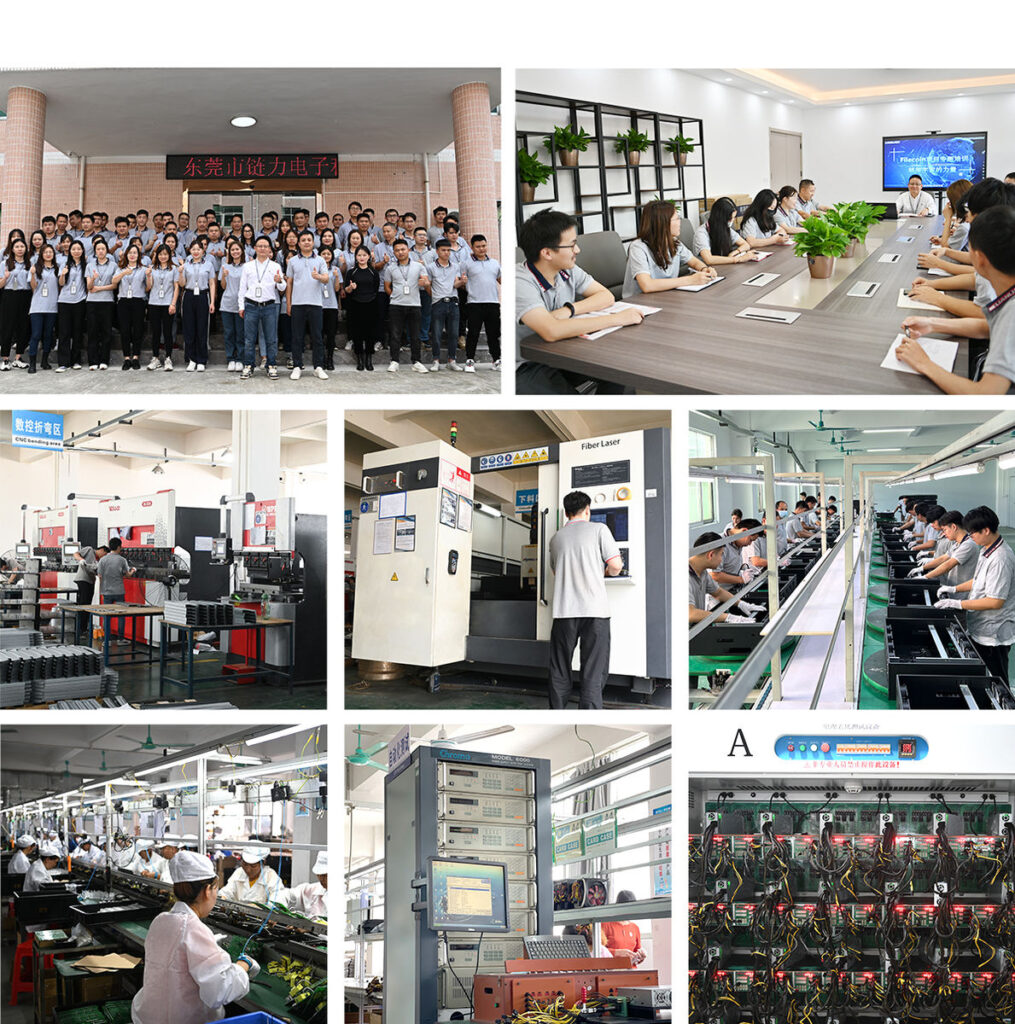
- Factory testing — full system burn-in and testing before shipment
- Certifications — CE, ISO 9001, relevant electrical safety certifications
- Engineering support — site assessment, foundation design, installation supervision
- After-sales support — remote monitoring, spare parts, on-site service capability
- Warranty — minimum 12 months on complete system; 24 months preferred
- Customization — ability to configure power, cooling, and IT infrastructure to your specifications
Shipping & Logistics
40ft containerized data centers ship via standard container shipping — the container IS the shipping vessel. This dramatically simplifies logistics:
- Standard flatbed truck transport to port
- Standard container vessel ocean freight
- Standard port handling and customs clearance
- Flatbed truck delivery to final site
- Crane placement on foundation
Factor in: ocean freight, import duties (HS code: 8471.50 or 8537.20 depending on configuration), customs clearance, inland transport, crane hire, and commissioning costs.
Featured Product: 40ft Containerized Liquid-Cooled Modular Mobile Data Center
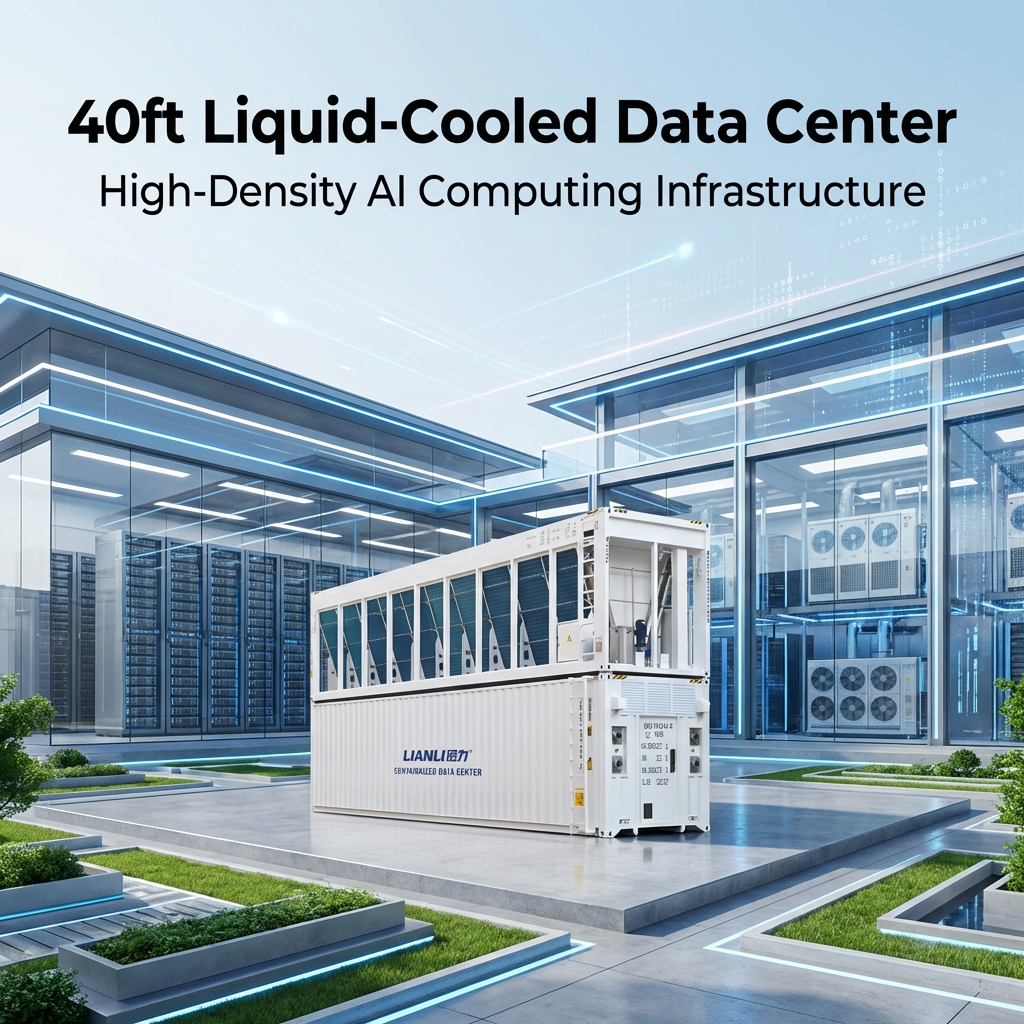
MEGA BDM has sourced and verified the 40ft Containerized Liquid-Cooled Data Center Modular Mobile Data Center Solution — purpose-built for AI, HPC, and cloud computing deployments requiring high density compute capacity and low PUE operation.
This solution is designed for operators who need to deploy serious compute infrastructure fast — without the 2–4 year timeline and massive capital commitment of traditional data center construction.
👉 View the 40ft Containerized Liquid-Cooled Data Center on MEGA BDM
Need detailed specifications, custom configuration, site assessment support, or bulk pricing for multiple units?
Frequently Asked Questions
How long does it take to deploy a containerized data center?
From order to live operation: typically 13–26 weeks — manufacturing (8–16 weeks) plus shipping (3–6 weeks) plus installation and commissioning (1–2 weeks). Compare this to 27–54 months for traditional data center construction.
Can a containerized data center operate outdoors?
Yes — containerized data centers are specifically designed for outdoor deployment. They include weatherproofing, insulation, and HVAC systems rated for the target climate. Confirm IP rating and operating temperature range for your deployment environment.
What power supply is required on-site?
This depends on the system configuration. Typical requirements range from 200kW to 2MW+ of utility power. The container includes internal power distribution; you need to provide the incoming utility feed at the specified voltage and capacity.
Is liquid cooling safe for IT equipment?
Yes — modern liquid cooling systems (DLC cold plate and immersion) are specifically engineered for IT equipment and have been deployed at scale by major cloud providers and HPC operators worldwide. Properly designed systems have no greater risk of liquid damage than air-cooled systems.
Can the container be relocated after deployment?
Yes — this is one of the key advantages of containerized data centers. The container can be disconnected from utilities, loaded onto a truck, and redeployed at a new site. This makes them ideal for temporary deployments, disaster recovery, and evolving infrastructure needs.
What is PUE and what should I target?
PUE (Power Usage Effectiveness) = Total facility power ÷ IT equipment power. A PUE of 1.0 is perfect. Liquid-cooled containerized data centers typically achieve PUE of 1.03–1.15, compared to the global average of 1.58 for traditional facilities. Lower PUE = lower electricity costs per unit of compute.
Conclusion
The 40ft containerized liquid-cooled modular data center is not a niche product — it is rapidly becoming the deployment model of choice for AI infrastructure, HPC clusters, and edge computing nodes worldwide. Its combination of speed-to-deployment, liquid cooling efficiency, scalability, and cost-effectiveness makes it the most practical solution for operators who need serious compute capacity now, not in three years.
As AI workloads continue to grow exponentially and power densities push beyond what air cooling can handle, liquid-cooled containerized data centers will become the dominant infrastructure format for the next decade of computing growth.
MEGA BDM connects buyers with verified global manufacturers of containerized data center solutions, providing transparent pricing, technical specification support, and dedicated sourcing assistance from inquiry to deployment.
👉 View the 40ft Containerized Liquid-Cooled Data Center on MEGA BDM and contact our sourcing team to discuss your infrastructure requirements.